Couples & family
Budgeting as a Couple: One Shared Ledger, Two Clear Views
The standard advice for couples is either "merge everything" or "keep it all separate and split the rent." Both work for some people and neither works for most. Most couples share some costs, keep some spending personal, earn different amounts, and would like the arithmetic to be fair without having to do it on the back of an envelope at the end of every month.
What they need is one shared ledger and two clear views of it.
One ledger, three columns
Every shared expense goes into one list: rent, groceries, the electricity bill, the dinner out. Each line carries a split rule. When you look at the list, you can see three things: what is mine, what is yours, and what is ours. Mine plus yours must equal ours, to the cent. If it does not, something is wrong, and the ledger should refuse to pretend otherwise.
That reconciliation is the whole trick. It turns "I think I paid more this month" into a number both people can check.
Pick a split rule per expense, not per couple
Couples argue about splits because they try to pick one rule for everything. Pick per expense instead:
- 50/50 for things you both use equally: streaming, the internet, the takeaway.
- A fixed percentage for things one person uses more: the car if one of you commutes in it.
- By income for the big fixed costs, rent above all. If one partner earns 60% of the household income, they pay 60% of the rent. This is the rule that makes different salaries feel fair.
- A custom amount for the odd case: one person pays the first $50 of the phone bill because it is their plan, and the rest splits.
Once each expense has its rule, the split is automatic and the conversation is over.
Refunds, and why negative numbers are a trap
A refund is not a negative expense. If you type "-45" into a ledger, half the time it ends up on the wrong side of the split and the other half it breaks a report. Treat a refund as its own kind of entry that reverses a specific expense under the same rule, so it lands on both partners' sides exactly as the original did.
Settle up once a month, and freeze it
At the end of the month, the ledger says who owes whom. One partner paid the rent, the other bought most of the groceries; the net might be $180 from one to the other. Settle it, with a bank transfer or a linked transfer between accounts, and then freeze the month: the names, the rules and every receipt line as they stood when you settled.
Freezing matters because things change. Next month you might move to a by-income rule for the car. That should not rewrite last month's settlement. If you discover a mistake later, the correction goes in as a separate addendum, so the original agreement stays exactly as you both saw it.
Joint goals without arguing about who put in more
A shared goal, the holiday or the deposit, has an expected contribution split just like an expense. If the rule is by income, the higher earner is expected to contribute more, and progress is measured against each person's expected share rather than the raw dollars. Nobody is "behind" for contributing less if less was the agreed share.
Where the app comes in
The Couples & Family Budget is this ledger. Mine plus yours reconciles exactly to the shared total; each item carries a 50/50, fixed-percent, by-income or custom rule; refunds are signed-safe with no negative-number entry; the monthly settlement is immutable with frozen names, rules and receipt lines, and post-settlement addenda preserve the original; settlement can be an external payment or a linked account transfer; and joint goals are measured against each partner's expected contribution. It runs offline on one device with a six-step guided setup and a complete JSON backup, and nothing about your finances is uploaded anywhere.
Frequently asked questions
Do we need a joint account?
No. The ledger tracks who paid and who owes; settlement can be a simple transfer between separate accounts. Some couples use a joint account for shared bills and keep the ledger for everything else.
What if we earn very different amounts?
Use the by-income rule for the large fixed costs and 50/50 for the small shared ones. Most couples find that combination fair once they see the numbers side by side.
How do we handle a purchase one of us made for both of us?
Enter it as a shared expense paid by that partner, with the normal split rule. The settlement at month end reimburses the difference automatically.
Keep reading
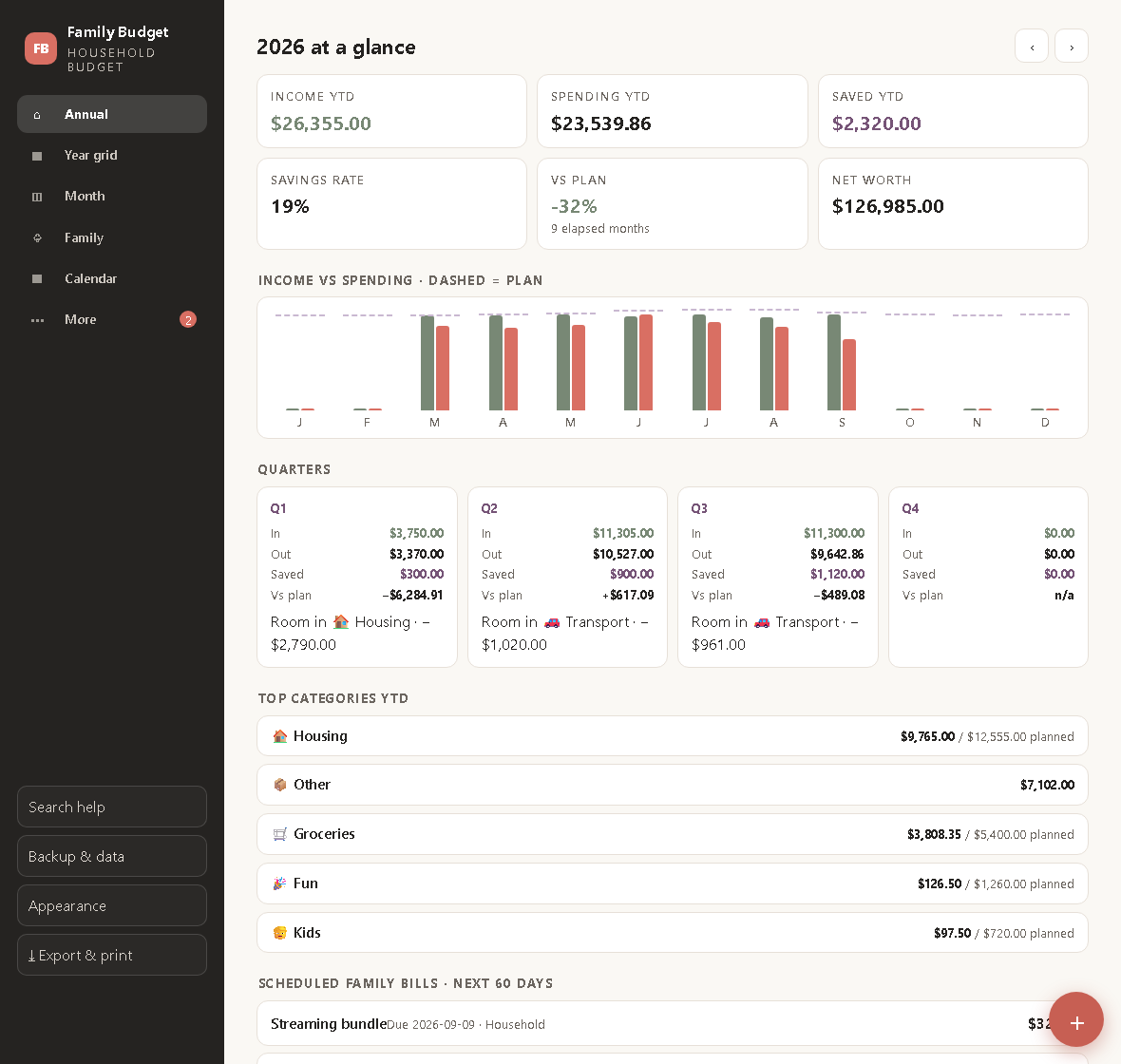
How to Run a Family Budget Everyone Can See (Without a Scoreboard)
Tag only the costs that belong to a person, leave the rest as household, plan seasonal bills by school year, and print the month on the fridge.
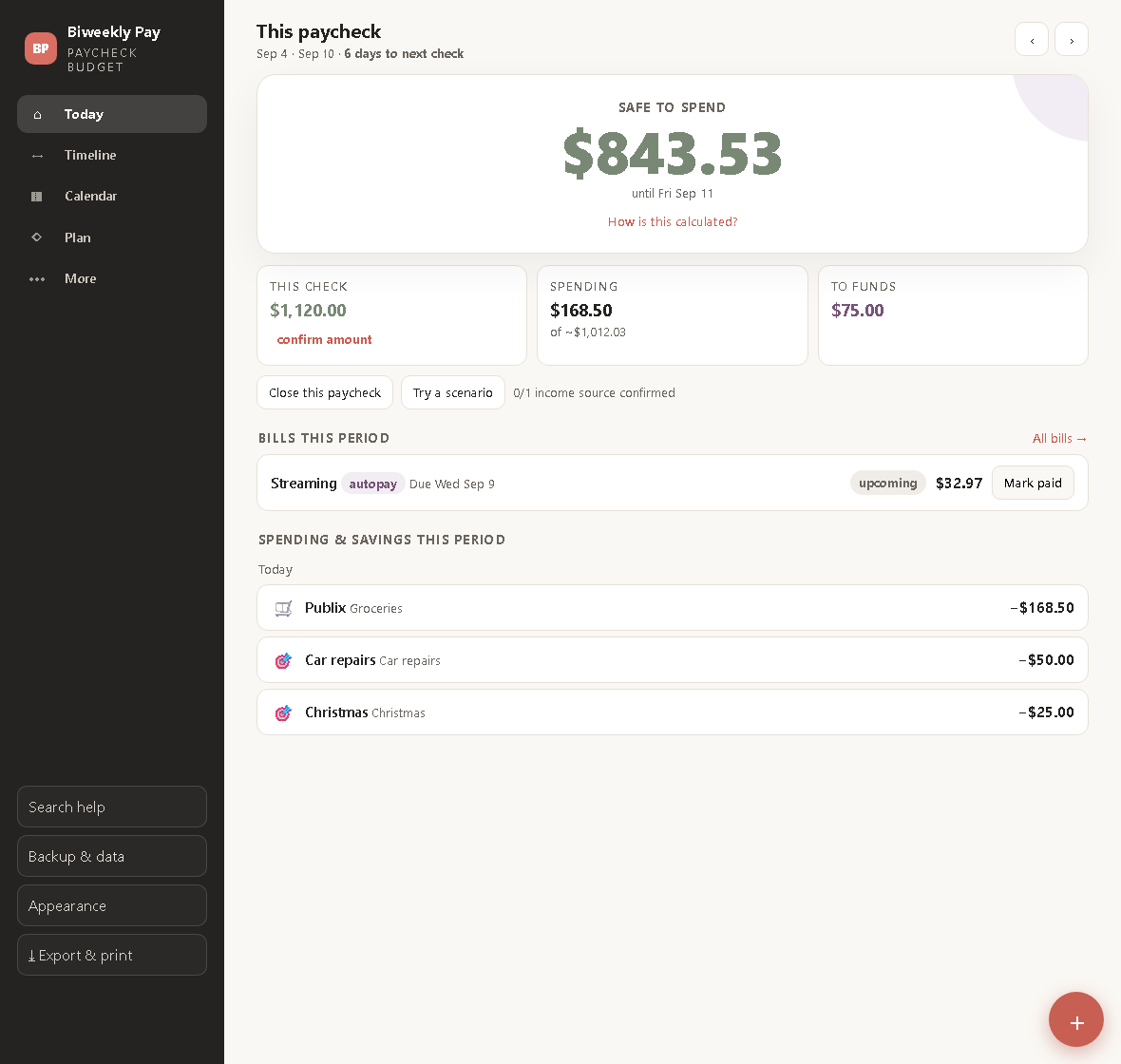
How to Budget When You're Paid Every Two Weeks
A biweekly paycheck budget assigns every bill to the check that funds it. Here is the method, the three-check month, and the one number to watch.
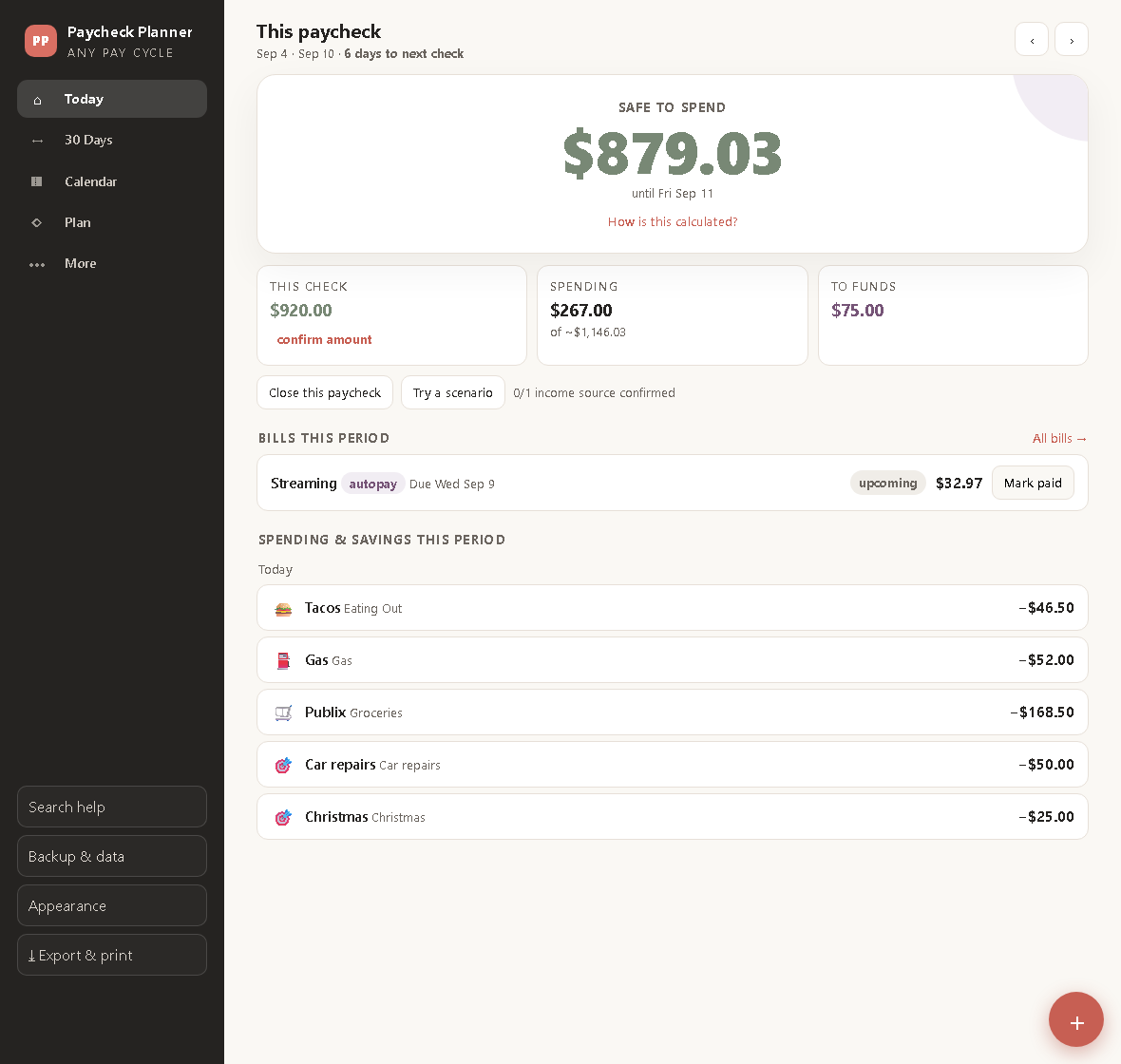
Budgeting a Household With Two, Three or Four Pay Schedules
One person weekly, one biweekly, a side job monthly. How to budget mixed income without guessing which payday covers which bill.