Paycheck budgeting
Budgeting a Household With Two, Three or Four Pay Schedules
Two-income households rarely get paid on the same rhythm. One partner is on a biweekly salary, the other is paid weekly on Thursdays, and there is a side business that pays out on the first of the month. Add a twice-monthly pension or a fortnightly contract and you have four income schedules feeding one set of bills.
Monthly budgeting flattens all of that into a single number and then wonders why the second week of every month feels tight. The paydays themselves are the structure. Budget around them and the tightness has a cause you can see.
Lay every payday on one calendar
Start by putting every income source on the same calendar for the next thirty days, each in its own colour. Weekly pay produces four or five entries. Biweekly produces two, sometimes three. Twice-monthly produces two on fixed dates. Monthly produces one.
Looking at thirty days this way shows two things a monthly total hides:
- Clusters. Two or three paydays that land within a day or two of each other, followed by a long gap. The gap is where households run short, and it is entirely predictable.
- Merges. A weekly and a biweekly check that fall on the same Friday. On the calendar they are one payday with a bigger deposit; in the budget they are still two sources, and it matters which one is short when one of them is.
Trace each bill to the payday that funds it
With the paydays laid out, take each upcoming bill and trace it back to the last payday before it is due. Rent due on the 1st traces to whichever check lands last in the previous month. The phone bill due on the 18th traces to the Thursday check on the 16th.
Doing this for a month reveals that some paydays are carrying far more than their share. A weekly check of $700 might have $900 of bills traced to it purely because of where the dates fall. That is an underfunded check, and it is the single most common reason a mixed-income household feels poorer than its total income suggests.
The fix is to move the bill's funding, not its due date. Assign it to the biweekly check that landed four days earlier and hold the money. The bill still pays on the 18th; it is just funded by a different deposit.
Combined paydays and short periods
When two checks land the same day, treat them as one household payday for the purposes of Safe to Spend, but keep the confirmation separate. If the weekly check is short because of a missed shift, you want to know which source it was, because that changes what you do next week.
Short periods are the other trap. With four schedules, the gap between one payday and the next can be two days. A two-day period with a bill in it looks fine on paper and is a cash crunch in practice, because the money has not cleared before it has to leave. Any bill due within a day or two of a payday should be funded by the payday before that one.
Count the paydays, not the weeks
Weekly pay produces five checks in some months; biweekly produces three twice a year. Those are the months where a mixed household can either make real progress or fritter the extra away. Because every bill has already been traced to a specific payday, the extra checks have no bills attached by default. Decide in advance what they fund, and a five-Friday month becomes a debt payment or a savings deposit rather than a slightly more comfortable feeling.
Where the app comes in
The Paycheck Budget Planner is built for exactly this household. It combines up to four active income sources across weekly, biweekly or fortnightly, twice-monthly and monthly schedules, shows the next thirty days source by source on a colour-keyed calendar with separate same-day chips, traces every upcoming bill to the income source or combined payday funding it, and flags short periods, same-day merges and underfunded checks before they bite. Five-payday and three-payday months are detected automatically. It runs offline with nothing uploaded, and a complete JSON backup keeps the household's data yours.
Frequently asked questions
Do we need a joint account for this to work?
No. The method is about which deposit funds which bill; where the money sits is a separate decision. Many households keep separate accounts and simply agree which payday covers which bills.
What if one income is irregular, like commission or freelance work?
Enter the schedule you expect and confirm the real amount each time it lands. Assign only the bills that are safe to fund from it, and let the steadier incomes carry the fixed costs. Irregular income is easier to manage when it is not the thing holding up the rent.
How is this different from a single biweekly budget?
A single-schedule budget assumes one income rhythm. Mixed-schedule budgeting keeps every source separate, forecasts thirty days by source, and handles the days when two paydays collide, which is where single-schedule tools give the wrong answer.
Keep reading
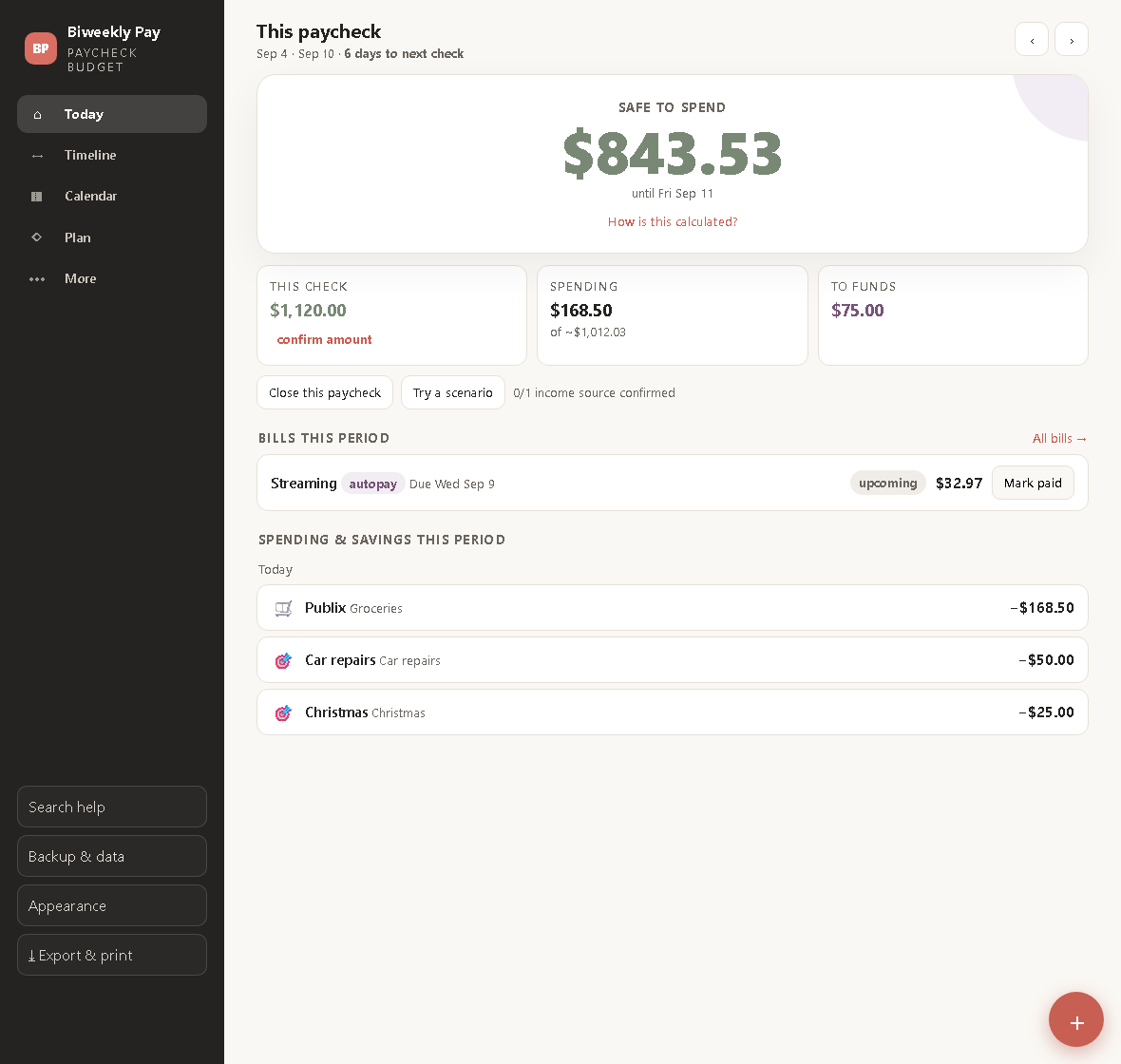
How to Budget When You're Paid Every Two Weeks
A biweekly paycheck budget assigns every bill to the check that funds it. Here is the method, the three-check month, and the one number to watch.
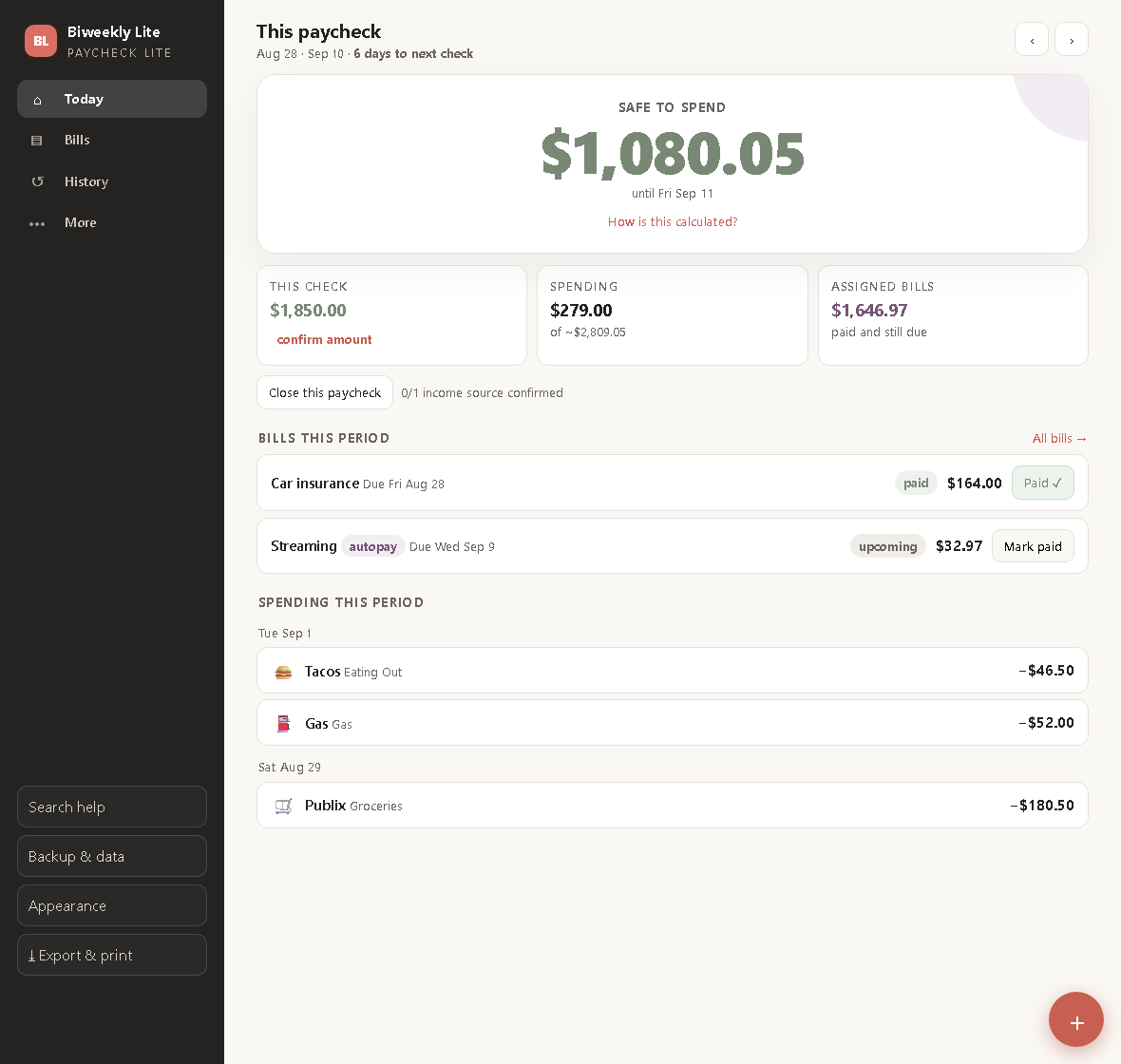
The One-Paycheck Budget: Protect Every Bill With a Single Number
A stripped-back method for one income paid every two weeks. Match bills to checks, confirm the deposit, and live by one honest Safe to Spend figure.
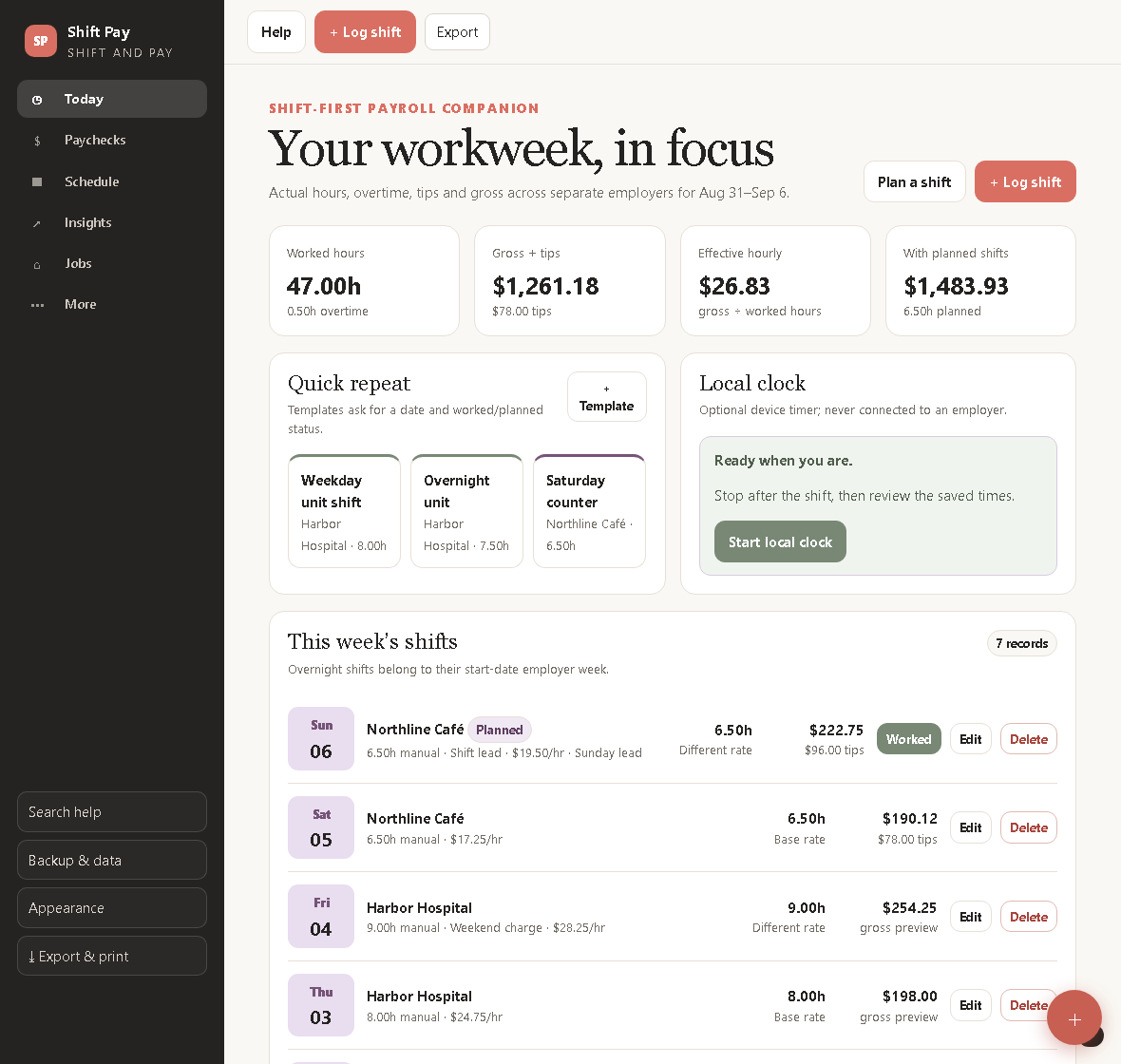
Budgeting on an Hourly Wage: Know Your Paycheck Before Payday
Hourly, tipped or working two jobs? How to predict your real check from the shifts you have worked, catch payroll mistakes, and budget on income that moves.