Couples & family
How to Run a Family Budget Everyone Can See (Without a Scoreboard)
A family budget goes wrong in one of two directions. Either everything is one pot and nobody can see why the month is tight, or every dollar is tagged to a person and the budget turns into a scoreboard that makes dinner awkward. The useful version sits between them: most of life is shared, some costs genuinely belong to someone, and the budget should show the difference without making a point of it.
Tag people, sparingly
Football boots belong to the child who plays football. The vet bill belongs to the dog. The electricity bill belongs to nobody in particular, and trying to divide it by head count is how scoreboards begin.
So tag only the expenses that meaningfully belong to a person or a pet, and leave everything else as Household. Then insist on one check: person-tagged spending plus household spending must equal total spending, exactly. If a dollar is tagged to nobody and to Household at the same time, or to nobody at all, the report is wrong, and a report you cannot trust is worse than none.
Done this way, per-person figures answer a real question, "what does the swimming actually cost a year?", without implying anyone should feel guilty about it.
Averages that admit how far into the year you are
A per-person figure in March is three months of spending. Compare it with a twelve-month plan and every child looks cheap. Compare it with three months of plan and you see the truth. Any "at this pace" estimate should be labelled as exactly that: an extrapolation from the elapsed months, not a forecast anyone promised.
When someone leaves the household, a grown child moving out, a pet that passed, archive them rather than deleting. Their history stays in the reports for the years they were part of it, and the reminders for their allowance stop.
Seasonal bills follow the school year
Household bills do not all run January to December. School fees, activity subscriptions, uniforms and after-school care follow the school year; summer brings camps and holidays; some things run all year. A family budget that only knows "monthly" makes you fudge these into twelve equal payments and then wonder why September is always short.
Give each recurring bill its season: all year, school year, summer, or a custom range. The budget then expects the activity fee in September and not in July, and the family calendar shows the real shape of the year rather than a flat line.
Allowances: confirm, do not assume
Pocket money is the one bill that is easy to forget both ways: forgotten and unpaid, or assumed paid and actually not. A weekly or monthly allowance should appear as a reminder that a parent confirms, not as an automatic entry that silently posts. If you miss a few weeks, the reminders should catch up to a sensible cap rather than presenting a child with eight weeks of back pay they did not know about.
The same confirm-first principle applies to anything automatic. An Automation Center that shows what will post by itself, what needs a tap, and what it expects to be empty this month is how you keep the machine honest.
Put the month on the fridge
The budget that works for a family is the one everyone can see. Print the month: what is due, what has been paid, what is coming. A single page on the fridge does more for household cooperation than any app notification, because it is in the room where the conversations happen.
Where the app comes in
The Family Budget Planner is built on these principles. Member-tagged spending reconciles exactly with Household overhead; per-member averages use elapsed-month maths with clearly labelled at-this-pace estimates; archived members keep their history and stop new reminders; bills run all-year, school-year, summer or custom seasons; weekly and monthly allowances are confirm-first with a catch-up cap; the Automation Center shows automatic, manual and expected-empty counts; and Fridge Mode prints the month for the door. There is a year grid, a monthly ledger, a responsive family calendar with a mobile agenda, funds, net worth and frozen month closes. It runs offline with complete backups.
Frequently asked questions
Should the children see the budget?
The fridge print, yes. It teaches that money is planned rather than magic. The detailed per-person figures are for the adults; they exist to answer cost questions, not to be compared across siblings.
How do we budget for a baby on the way?
Add a member before they arrive and tag the one-off costs to them. After the first year you will have a real figure for what a first year costs, which is the number the internet can never give you.
What counts as Household versus tagged to a person?
If you would still pay it with one fewer person in the house, it is Household. If it would disappear with that person, tag it to them.
Keep reading
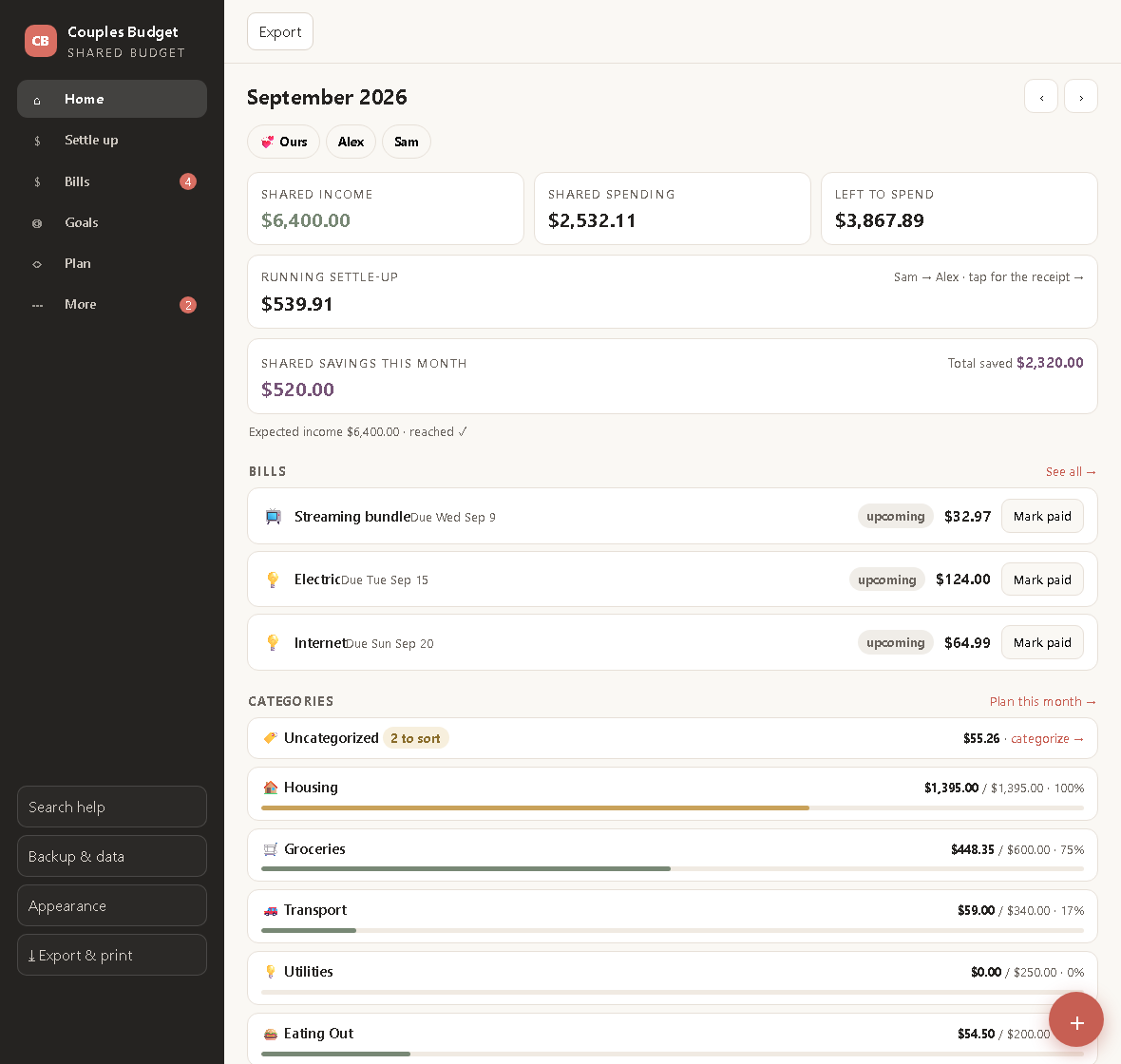
Budgeting as a Couple: One Shared Ledger, Two Clear Views
How two adults can share costs without merging every dollar, with split rules, a monthly settlement you can both verify, and no scoreboard.
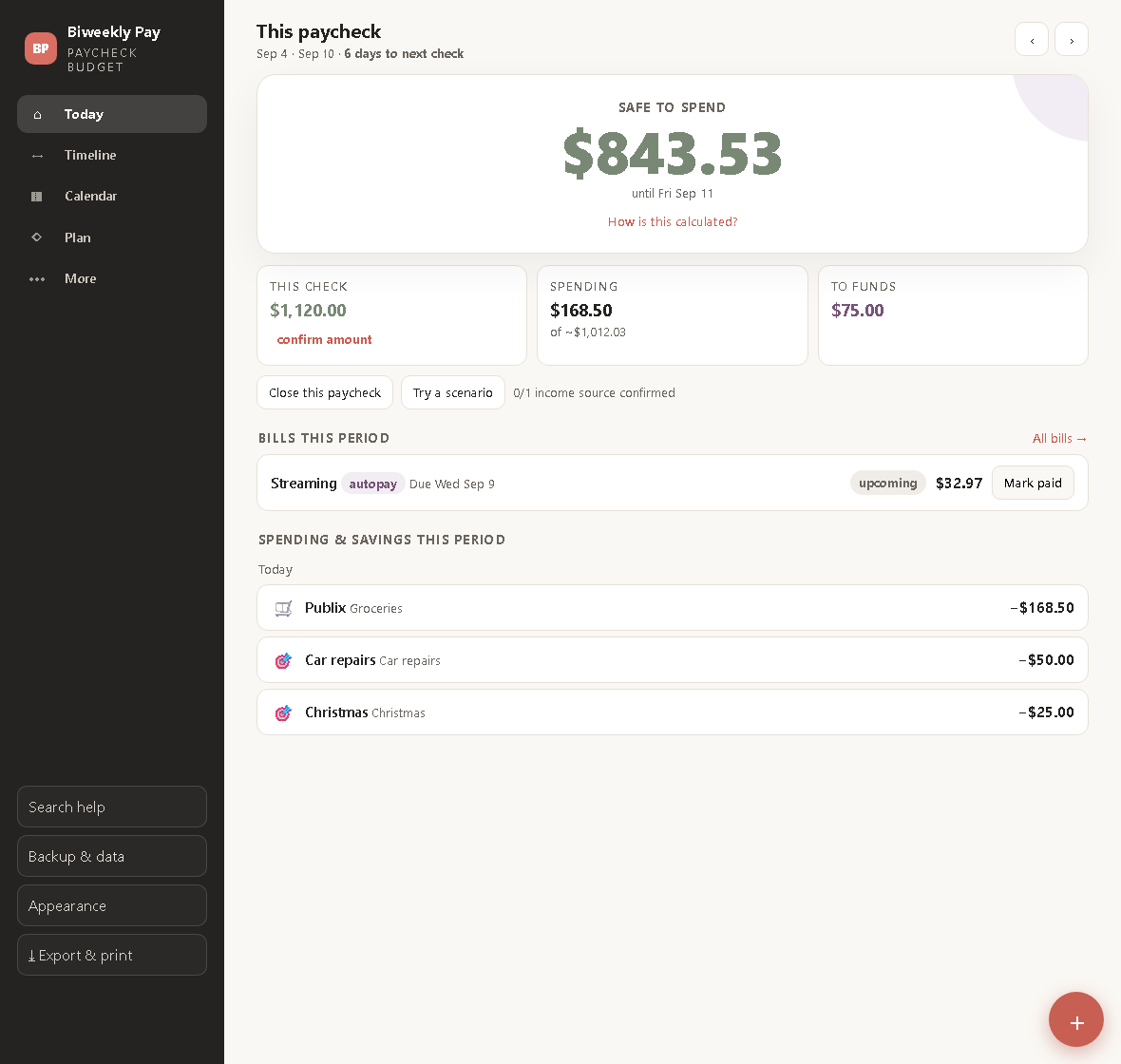
How to Budget When You're Paid Every Two Weeks
A biweekly paycheck budget assigns every bill to the check that funds it. Here is the method, the three-check month, and the one number to watch.
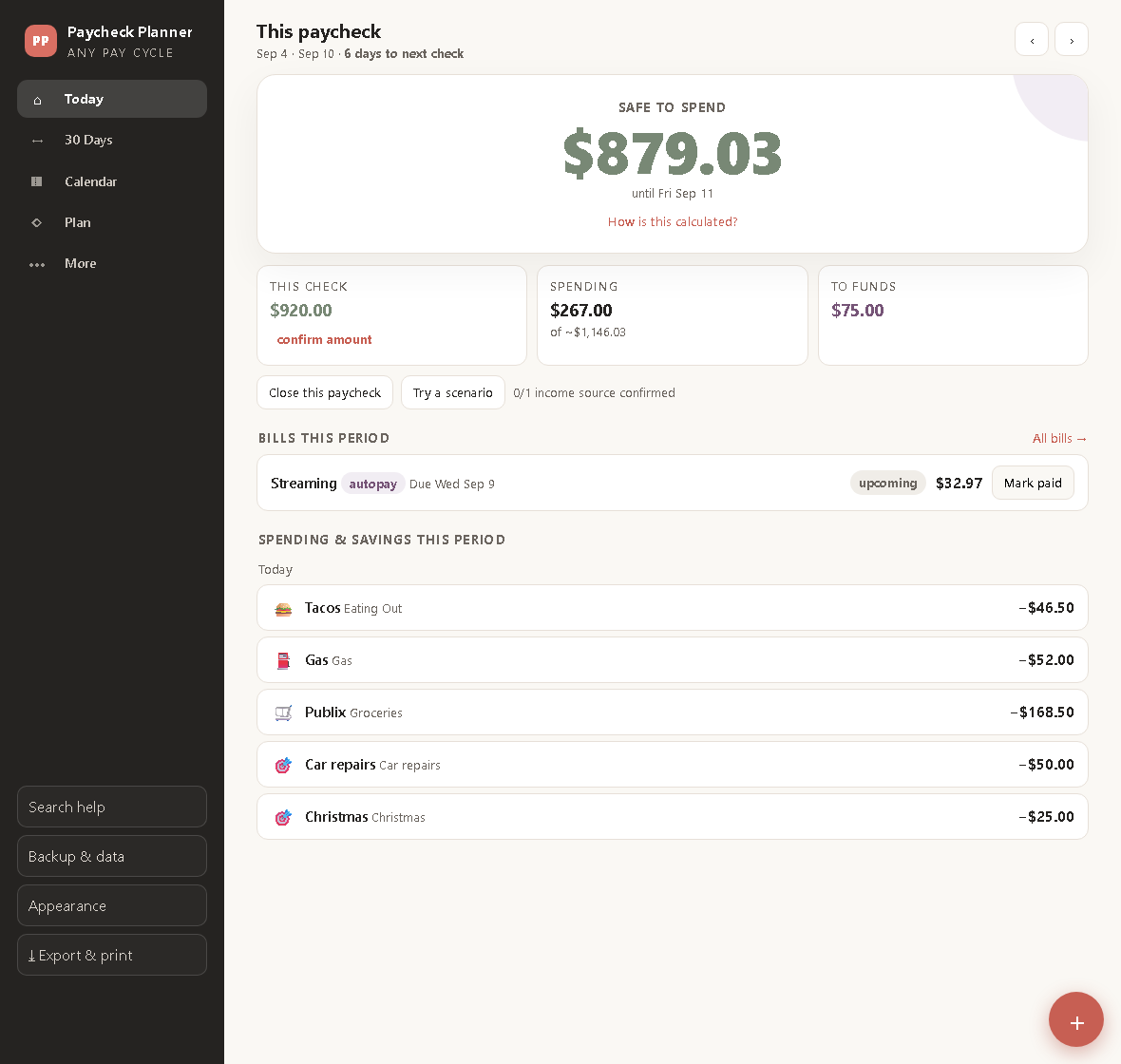
Budgeting a Household With Two, Three or Four Pay Schedules
One person weekly, one biweekly, a side job monthly. How to budget mixed income without guessing which payday covers which bill.