Paycheck budgeting
How to Budget When You're Paid Every Two Weeks
Most budgeting advice assumes you are paid once a month. If your money arrives every other Friday, that advice has a hole in it: your bills are monthly, your income is not, and the two never quite line up. The rent is due on the first, but the check that pays it lands on the 28th, or the 30th, or in a bad month the 2nd.
The fix is not a bigger spreadsheet. It is a different unit of time. Stop budgeting the month and start budgeting the paycheck.
The paycheck is the budget period
A monthly budget asks: "What will I earn and spend in September?" A paycheck budget asks a smaller, more answerable question: "What does this check need to cover before the next one arrives?"
Every two weeks you get a fresh period. Income for the period is one check. Obligations for the period are the bills that fall due before the next check, plus the groceries and fuel that carry you through those fourteen days. Whatever is left after both is the only number that matters day to day.
That number has a name in most paycheck apps: Safe to Spend. Income, minus the bills this check must fund, minus what you have already spent since payday. It goes up on payday and down as the fortnight runs, and it never pretends money earmarked for the electric bill is available for dinner.
Assign every bill to a check
This is the step that makes the method work. Take your list of monthly bills and, for each one, decide which check funds it.
The simple rule: a bill is funded by the last check that lands before it is due. Rent due on the 1st is funded by the check on the 28th. The phone bill due on the 20th is funded by the check on the 14th.
Two exceptions come up almost immediately:
- A bill due the day after payday. If the check lands on the 14th and the car payment leaves on the 15th, technically the 14th check funds it. In practice, money that must leave within a day of arriving should be treated as spent the moment the check clears. Mark it against that check and do not count it in Safe to Spend.
- A bill due too soon after a thin check. If one check has to cover rent, insurance and the car, and the other check has almost nothing, pull one of those bills a check earlier. You will hold the cash for two extra weeks, and the two periods stop feeling like feast and famine.
Once every bill has a home, a strange calm sets in. The question "can I afford this?" stops being a feeling and becomes a lookup.
The three-paycheck month
Twenty-six checks a year, twelve months: twice a year a month contains three paydays. People paid biweekly talk about it like a bonus. Treat it like one and it disappears; plan it and it is the single biggest lever you have.
Because every bill is already assigned to a specific check, the third check has nothing assigned to it by default. That is the point. Decide in advance where it goes: an emergency fund, an extra debt payment, the car insurance that comes due in November. Write the decision down in the month before it arrives, so the money has a destination before it has a temptation.
Confirm what actually landed
Paychecks vary. Overtime, a missed shift, a tax change, a benefits deduction that started this month. A budget built on the expected amount drifts from reality a little more each period.
On payday, look at the real deposit and record it. If it is short, the shortfall comes out of Safe to Spend, not out of a bill. If it is over, decide whether the extra rolls forward or goes to a goal. This thirty-second habit is what keeps the number trustworthy, and a trustworthy number is the only kind anyone keeps looking at.
A worked fortnight
Say the check on the 14th is $1,650. Bills assigned to it: phone $60, car payment $310, streaming $30, and the car insurance you pulled earlier, $95. That is $495 committed, leaving $1,155.
Groceries and fuel for two weeks run about $340. Safe to Spend on the morning of the 14th is $815, and it falls as the fortnight goes on. On the 21st, after a week of spending, it reads $520. That is the number that answers "can we go out on Friday?" without opening anything else.
Then the check on the 28th lands, rent is assigned to it, and the period starts again.
Where the app comes in
You can run all of this on paper. The friction is the bookkeeping: assigning bills, watching due dates, confirming deposits, and doing the subtraction honestly every day. The Biweekly Paycheck Budget was built to remove exactly that friction. Every bill is assigned to its due-date check or pulled one or two checks earlier, the Safe to Spend formula is visible and auditable, a six-check timeline shows the funding gaps before they happen, and three-check months are detected automatically. It handles weekly, biweekly, semi-monthly and monthly schedules for one or two earners, and it runs offline in your browser with nothing uploaded anywhere.
Frequently asked questions
What if my partner is paid monthly and I am paid biweekly?
Treat the household as having two income schedules, and assign each bill to whichever payday funds it. The monthly check tends to absorb rent and the big fixed costs; the biweekly checks take the bills that fall in between. An app that handles two earners on different schedules does this assignment for you.
Should I budget the three-check month as extra income?
Plan it, do not spend it by default. Decide before the month arrives what the third check does, whether that is an emergency fund, debt, or an annual bill that would otherwise squeeze a normal check.
How is this different from a monthly budget with two halves?
A monthly budget split in two still assumes the month is the unit and forces you to guess which half a bill belongs in. A paycheck budget makes the check the unit, so a bill is funded by a specific deposit on a specific date, and there is no guessing.
Keep reading
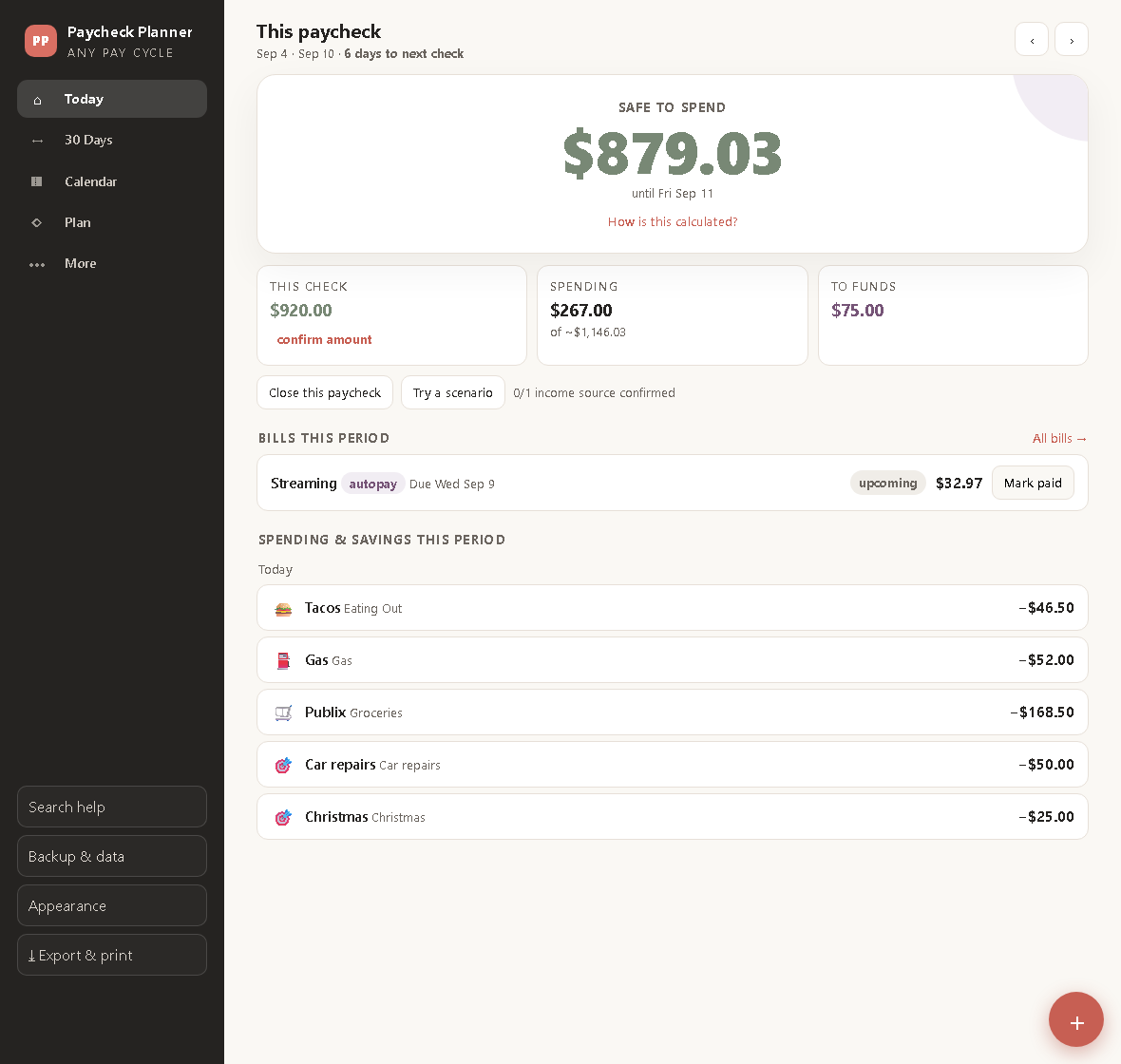
Budgeting a Household With Two, Three or Four Pay Schedules
One person weekly, one biweekly, a side job monthly. How to budget mixed income without guessing which payday covers which bill.
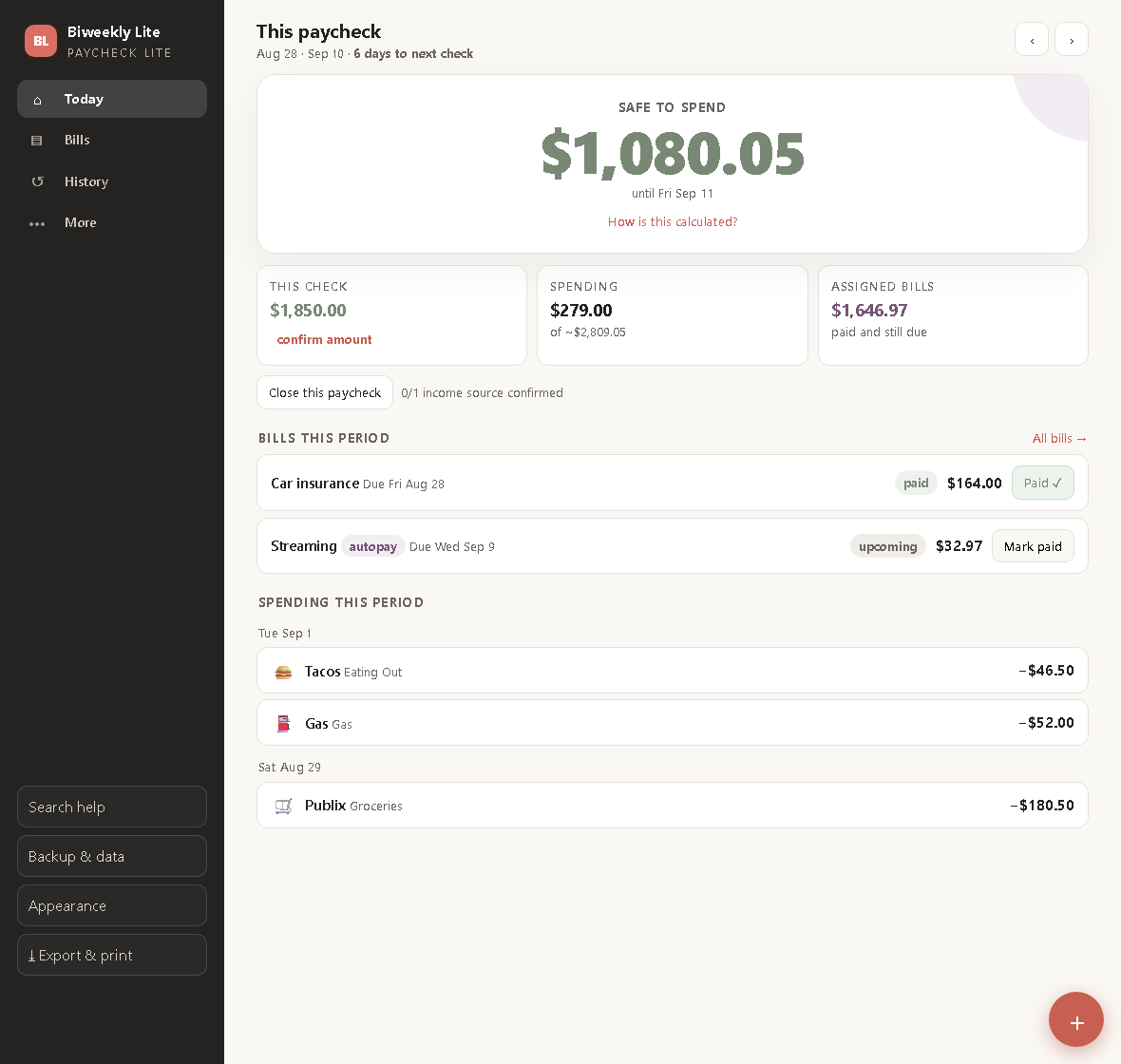
The One-Paycheck Budget: Protect Every Bill With a Single Number
A stripped-back method for one income paid every two weeks. Match bills to checks, confirm the deposit, and live by one honest Safe to Spend figure.
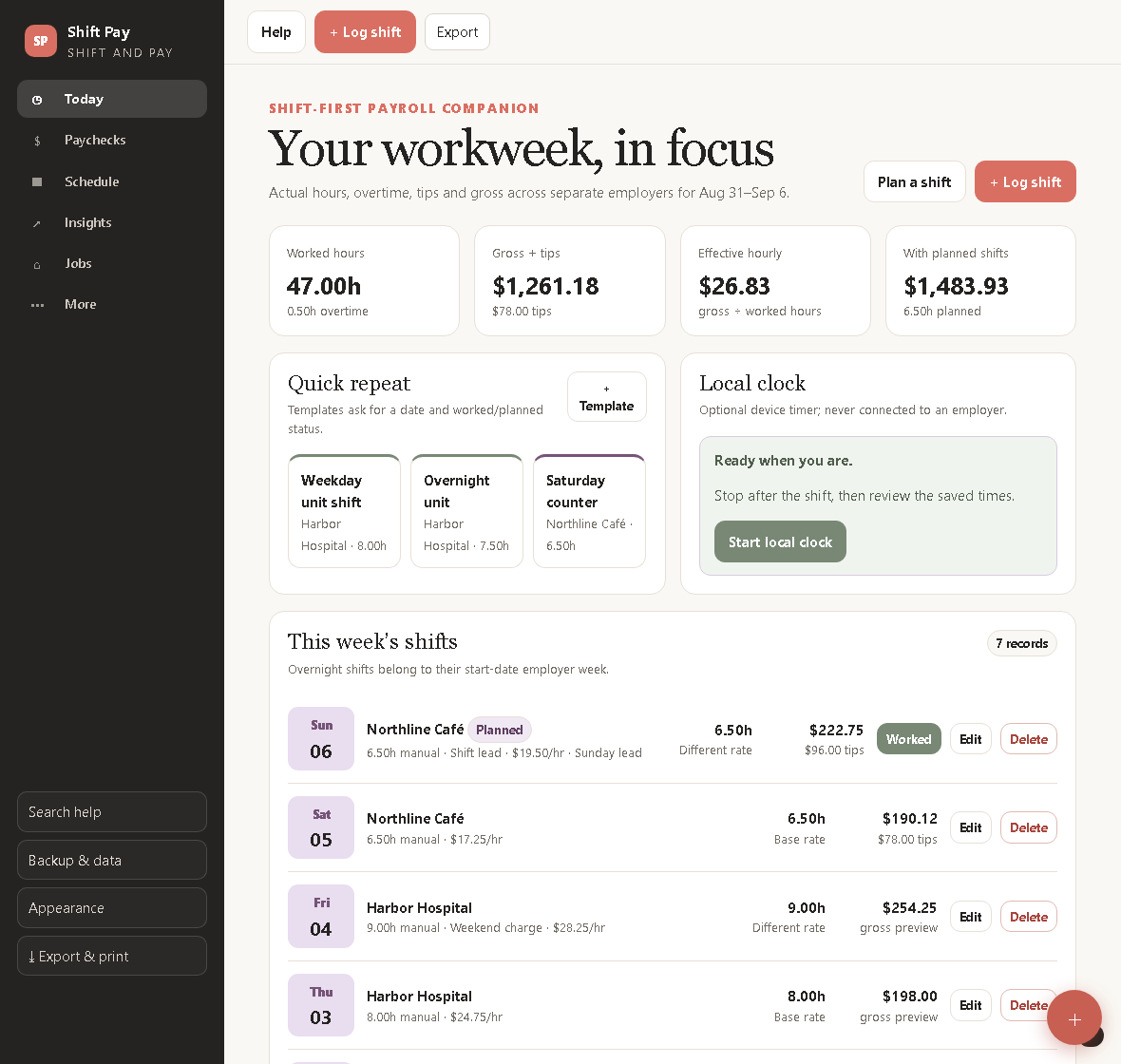
Budgeting on an Hourly Wage: Know Your Paycheck Before Payday
Hourly, tipped or working two jobs? How to predict your real check from the shifts you have worked, catch payroll mistakes, and budget on income that moves.