Paycheck budgeting
Budgeting on an Hourly Wage: Know Your Paycheck Before Payday
Salaried people know their paycheck to the dollar before it lands. If you are paid by the hour, you find out on payday, and by then the fortnight has already been spent on a guess. Overtime that did or did not get approved, a shift that ran long, a differential for the night you covered, tips that were good on Friday and dead on Tuesday. The check is the sum of a dozen small things, and nobody adds them up until the stub arrives.
Adding them up as you go is the whole trick. Log the shift the day you work it, and the paycheck stops being a surprise.
Log the shift, not the week
The unit that matters is the shift: start, end, unpaid break, and any tips. Write it down the same day, ideally the same hour, because the details evaporate fast. A shift that ran until 11:40 instead of 11:00 is forty minutes of pay you will never claim if you reconstruct the week on Sunday.
Three details deserve their own line:
- Unpaid breaks. Thirty minutes off the clock on an eight-hour shift is 6% of the day. Over a year it is a week and a half of pay, and it needs to be subtracted honestly or your estimate will run high.
- Overnight shifts. A shift that starts at 10 p.m. and ends at 6 a.m. spans two calendar days. Decide which day it belongs to (most employers use the start date) and be consistent, or your weekly hours will land in the wrong week.
- Tips. Cash and card tips separately, because they often hit your account at different times and are taxed differently.
Overtime is weekly, and the week is the employer's
Overtime is calculated over your employer's work week, not the calendar week and not the pay period. If the employer's week runs Wednesday to Tuesday and the pay period starts on a Monday, a single period can contain the tail of one overtime week and the head of another. Tracking hours per employer week is the only way to see overtime coming before the stub confirms it.
Working two jobs? Each employer has its own week and its own overtime threshold. Forty-five hours split across two jobs is usually no overtime at all, which is worth knowing before you plan around it.
Rates change; the history should not
A raise in March does not change what you earned in February. A night differential applies to the hours after a certain time, not to the whole shift. If your tracker only holds one rate, every raise quietly rewrites your history and your year-to-date figure drifts from the truth. Rates need effective dates.
Reconcile every stub
When the paycheck arrives, compare it with the estimate. Most of the time they match within a few dollars. When they do not, the difference is either a mistake on your side, which you fix, or a mistake on the employer's side, which you raise. Payroll errors are common and almost never in the worker's favour, and the only people who catch them are the ones who had a number to compare against.
Over time, the reconciled stubs give you something salaried people take for granted: a reliable take-home ratio. If your net is consistently 78% of gross, next period's estimate is gross hours times rate times 0.78, and you can budget on it two weeks early.
Budget on the estimate, then correct
With a projected check in hand before payday, budgeting on hourly income works the same way it does for anyone paid biweekly: match bills to the check that funds them, hold a Safe to Spend figure, and confirm the real deposit when it lands. The difference is only that your expected amount comes from your own shift log instead of a contract, and that is a more honest source anyway.
Where the app comes in
The Hourly Income Tracker is a shift log built for this: manual or clock times, unpaid breaks, tips and notes; overnight shifts with start-date week attribution and a sixteen-hour safety check; weekly overtime by employer, including pay periods that begin midweek; effective-dated base rates with night, weekend and custom variants; one-tap templates for the shifts you work every week; and current and next paycheck cards that keep actual and projected totals separate. Reconcile each stub, and it learns your take-home ratio. It runs offline on your phone or laptop, with a shift CSV export when you need the records elsewhere.
Frequently asked questions
I work two jobs with different pay days. Can one tracker handle both?
Yes, if it keeps employers separate: separate work weeks, separate overtime rules, separate pay periods. Combined hours matter for your budget; per-employer hours matter for overtime.
How do I handle tips that are pooled or paid out later?
Log what you were credited on the day, and correct it when the payout arrives. A tracker that lets you edit a past shift without breaking the weekly totals makes this painless.
What should I do if my stub does not match my log?
Check your own entries first, especially breaks and rounding. If the log is right, take the shift dates and hours to payroll. A written log with times is exactly the evidence that gets a correction made.
Keep reading
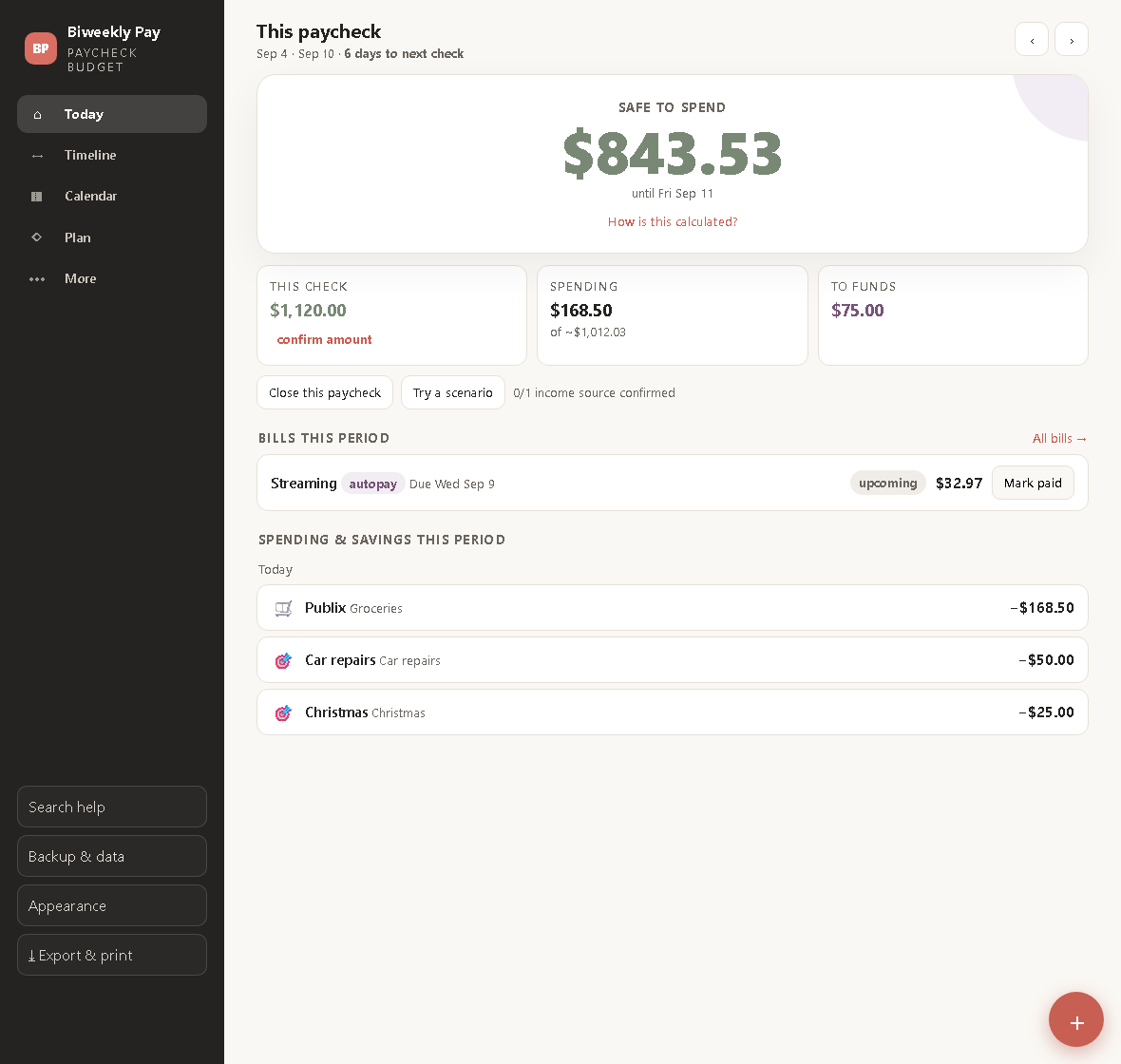
How to Budget When You're Paid Every Two Weeks
A biweekly paycheck budget assigns every bill to the check that funds it. Here is the method, the three-check month, and the one number to watch.
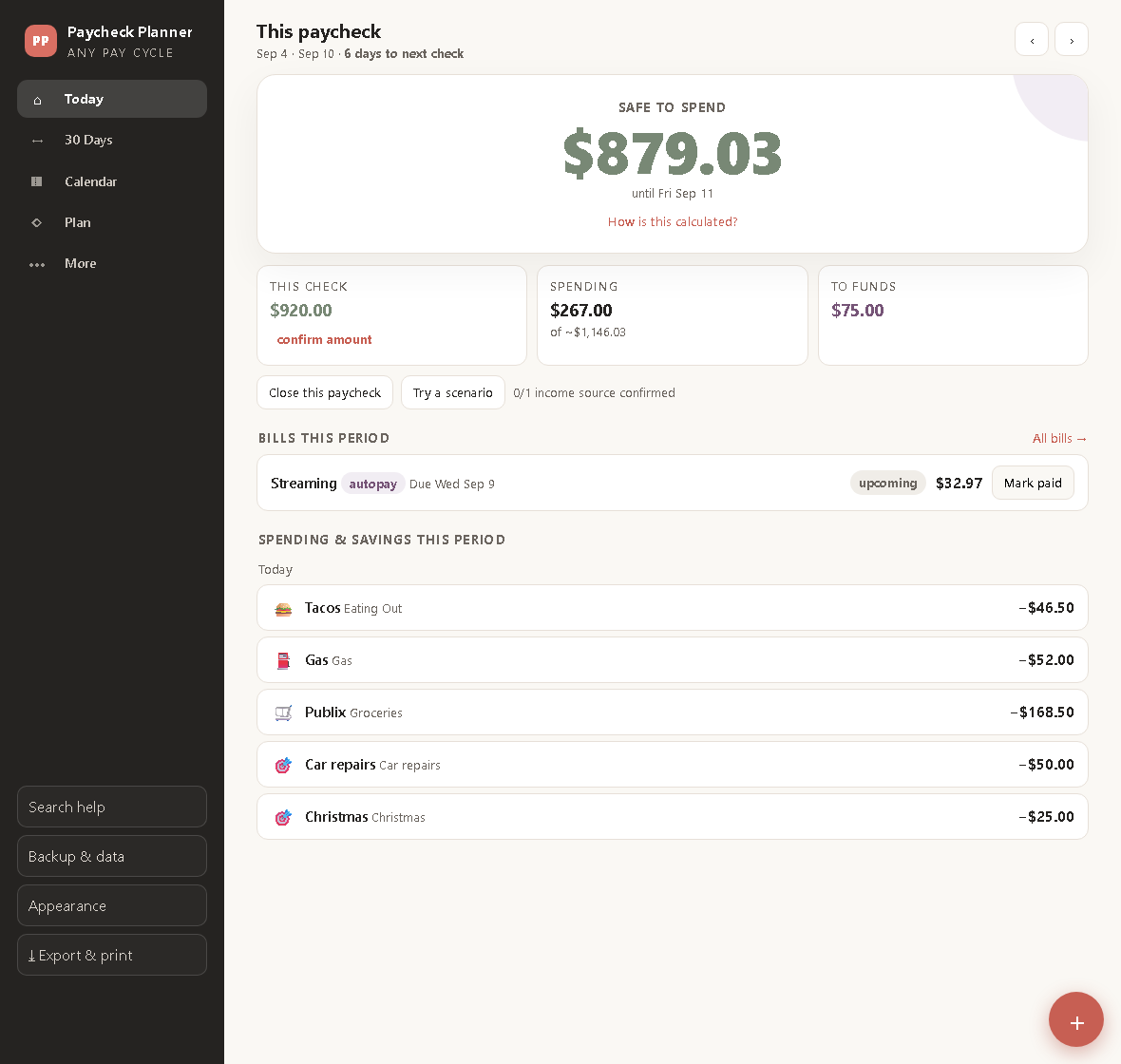
Budgeting a Household With Two, Three or Four Pay Schedules
One person weekly, one biweekly, a side job monthly. How to budget mixed income without guessing which payday covers which bill.
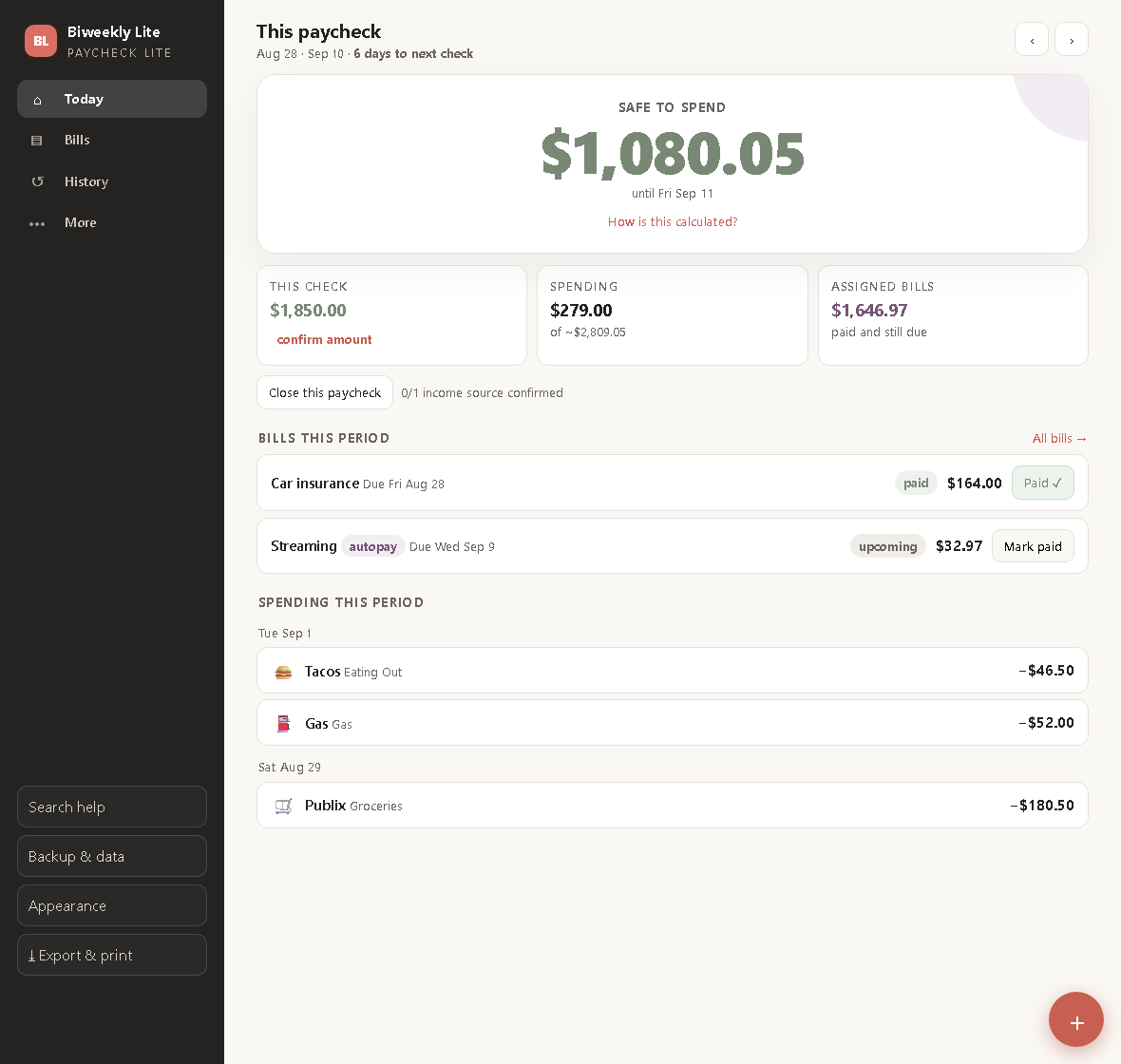
The One-Paycheck Budget: Protect Every Bill With a Single Number
A stripped-back method for one income paid every two weeks. Match bills to checks, confirm the deposit, and live by one honest Safe to Spend figure.