Paycheck budgeting
The One-Paycheck Budget: Protect Every Bill With a Single Number
If you have one job, one paycheck every two weeks and a list of bills that never quite fit the calendar, you do not need a financial operating system. You need one number you can trust on a Tuesday afternoon, and a way of keeping it honest without turning budgeting into a hobby.
This is the smallest budgeting method that still works for biweekly pay. Four moves, every two weeks.
Move one: match every bill to a check
Write down every recurring bill with its due date and how often it comes: monthly, weekly, quarterly, once a year. Then, for each one, name the paycheck that funds it. The rule is simple: the last check before the due date pays the bill.
Two adjustments make this livable:
- Pull awkward dates earlier. A bill due the day after payday has not really been funded by that check; the money has not had time to sit. Assign it to the check before, deliberately, and the period stops starting in the red.
- Spread the annual bills. Insurance once a year, a subscription once a quarter. Divide by the number of checks between now and the due date and set that much aside from each. Twenty-six small amounts are painless; one large one is a crisis.
Move two: confirm what actually landed
On payday, look at the deposit and record the real figure. Do not edit the schedule; the expected amount is still the expected amount. Just note what arrived this time. Overtime, a short week, a new deduction: all of it shows up here, and none of it should silently change the plan.
This is the single habit that separates budgets people keep from budgets people abandon. A number that matches the bank is a number you keep looking at.
Move three: log spending in seconds
Groceries, fuel, the coffee, the birthday present. Each one goes in the moment it happens, with a category if you want one and without if you do not. The point is not analysis. The point is that the number in move four stays true.
If logging takes more than ten seconds, you will stop. Keep categories few, keep the entry short, and keep an undo button close for the times you tap the wrong thing.
Move four: live by Safe to Spend
Safe to Spend is this check, plus any positive amount carried from the last one, minus the bills matched to this check, minus what you have logged since payday. It is one figure, recomputed every time something changes, and it answers the only question that matters between paydays: what can I spend without touching a bill?
The breakdown should always be visible. A number you cannot see the working for is a number you will second-guess.
The three-check month, and rollover
Twice a year, a calendar month holds three paydays. With every bill matched to a specific check, the third one has nothing attached. Decide in advance what it funds. And when a period ends with money left, let it roll forward as a positive balance, once, without compounding into a fantasy: last period's leftover joins this period's Safe to Spend, and that is the end of it.
Close the period
Every payday, before the new check is confirmed, freeze the one that just ended: what came in, what went out, what was left. Two weeks is short enough to remember and long enough to see a pattern. Thirteen closed periods is half a year of honest history.
Where the app comes in
Biweekly Budget Lite is the four moves and nothing else. One exact biweekly schedule with optional weekend-to-Friday shifting, automatic bill-to-paycheck matching with a pull-earlier option, actual paycheck confirmation that never rewrites the schedule, a spending log with editable categories and undo, three-check months detected without an upsell, non-compounding rollover, and a frozen review at each close. If your household later grows more complex, the complete JSON backup imports losslessly into the full Biweekly Paycheck Budget.
Frequently asked questions
I am paid biweekly but my partner is paid monthly. Is this enough?
Probably not on its own. This method assumes one income. Two schedules need each bill traced to whichever payday funds it, which is what the full paycheck planners do. Start here if you want to learn the habit; move up when the household needs it.
What happens when a bill lands on a weekend?
Most banks process it the next business day, and some employers pay early when payday falls on a weekend. A schedule that shifts weekend paydays to the Friday before keeps the matching honest.
Do I need to categorise spending?
No. Safe to Spend only needs to know that money left. Categories are optional and useful later, once you are curious where the fortnight went.
Keep reading
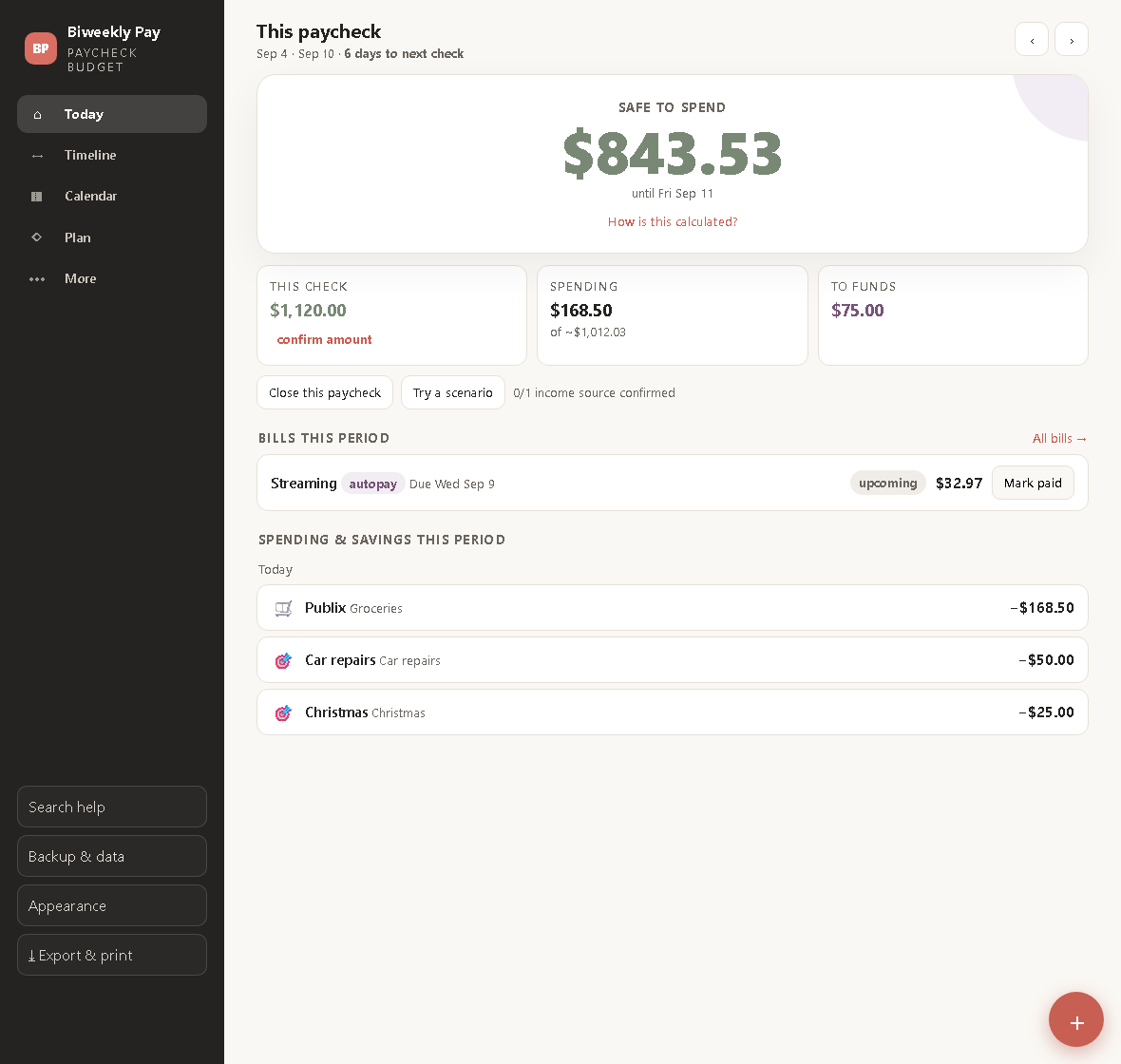
How to Budget When You're Paid Every Two Weeks
A biweekly paycheck budget assigns every bill to the check that funds it. Here is the method, the three-check month, and the one number to watch.
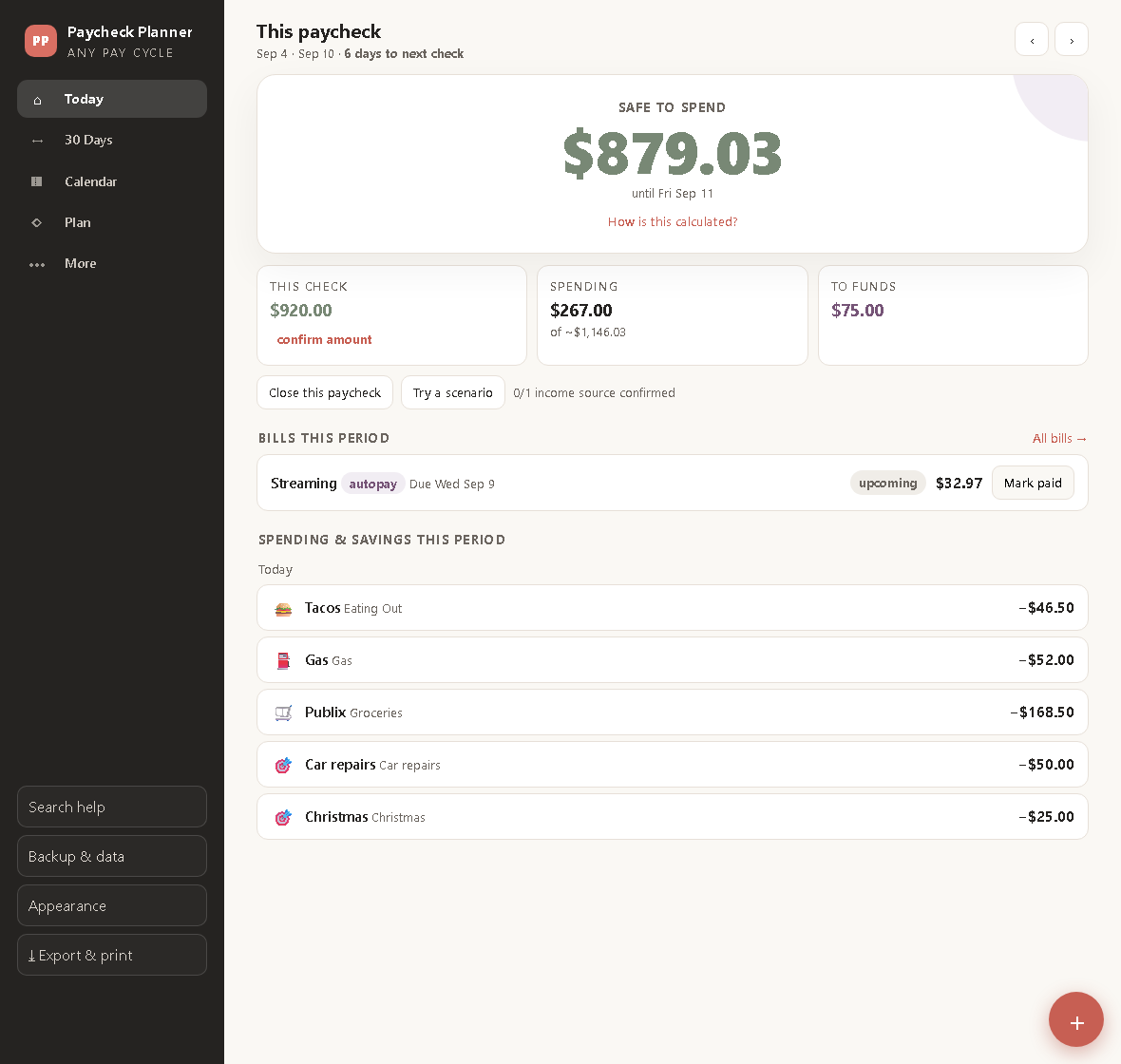
Budgeting a Household With Two, Three or Four Pay Schedules
One person weekly, one biweekly, a side job monthly. How to budget mixed income without guessing which payday covers which bill.
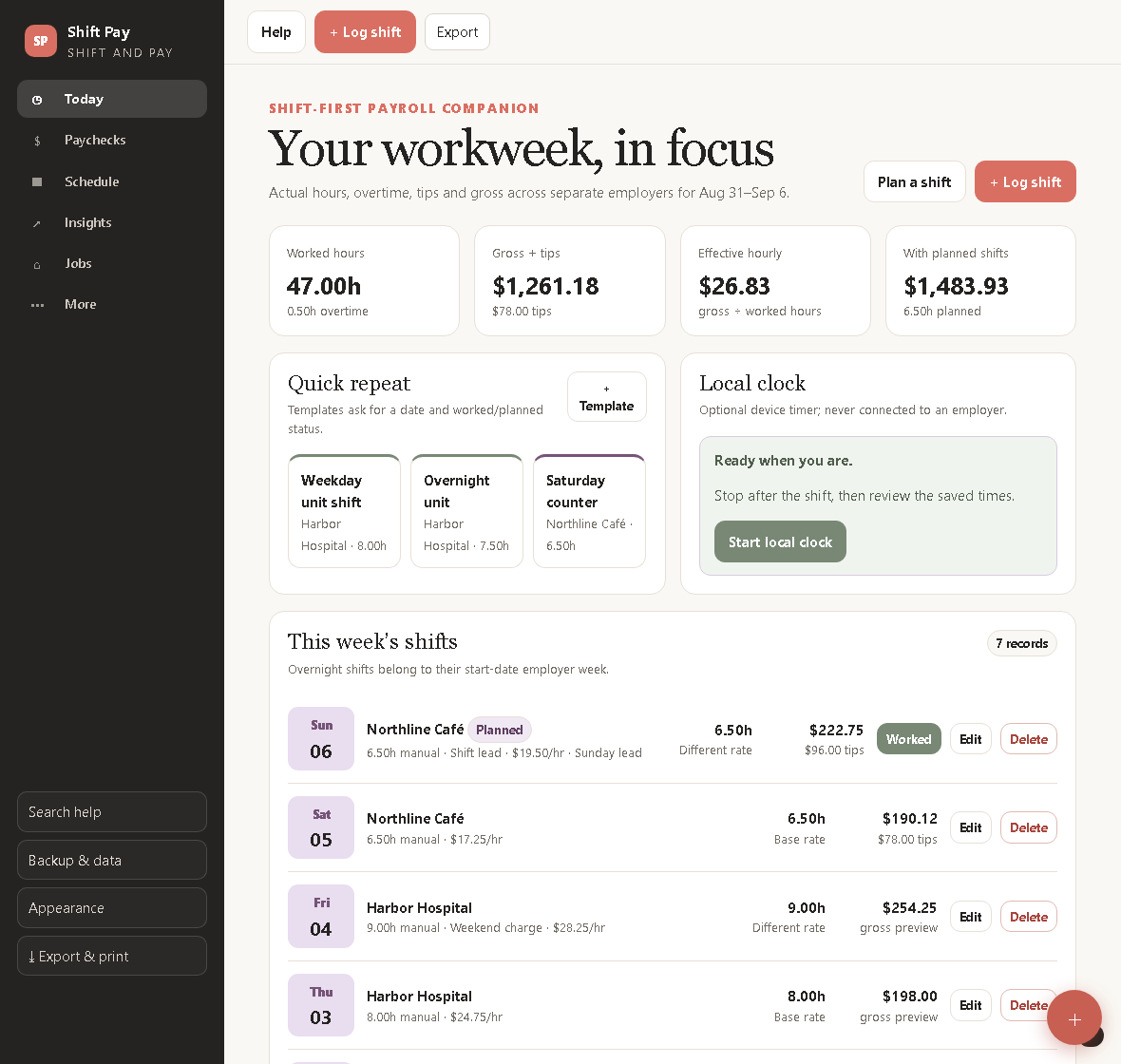
Budgeting on an Hourly Wage: Know Your Paycheck Before Payday
Hourly, tipped or working two jobs? How to predict your real check from the shifts you have worked, catch payroll mistakes, and budget on income that moves.