Monthly & annual budgeting
How to Make Your First Budget in Twenty Minutes
Most first budgets fail in the first week, and it is rarely because the person was bad with money. It is because the budget asked for forty categories, an hour every Sunday, and a level of precision no real month can deliver. By the second week it was already wrong, and a wrong budget is worse than none, because it teaches you that budgets do not work.
A first budget should answer three questions and take twenty minutes to build. Everything else can come later, if it ever needs to.
The three questions
Every time you open the budget it should tell you, without arithmetic:
- How much money is left? Not in the bank, but left after the bills that still have to come out this month.
- Which bill is next? The date and the amount, so nothing lands as a surprise.
- Is the month on plan? Ahead, behind, or about right, in one glance.
If the budget answers those, you will keep opening it. If it makes you work to find them, you will not.
Minute 0 to 5: list the bills
Write down every fixed bill for the month: rent or mortgage, utilities, phone, insurance, subscriptions, minimum debt payments. For each one: the amount and the day it leaves. Do not categorise, do not optimise. Just the list.
Put them in date order. This list is the spine of the whole budget, because these are the commitments the rest of the month has to fit around.
Minute 5 to 12: sketch a plan
Take the income you expect this month and subtract the bills. What is left is what the month actually has to work with. Split it into a handful of headings, five or six at most: groceries, transport, eating out, household, everything else. Give each a rough number. It will be wrong, and that is fine; the plan is a first guess that next month's version improves on.
One rule: the bills are a floor. If the plan for groceries plus eating out plus everything else exceeds the money left after bills, the plan is fiction, and the budget should say so rather than let you find out on the 25th.
Minute 12 to 15: pick one goal
One. An emergency cushion of $500, a holiday, paying off a card. Give it a target and a date, and work out what that needs each month. If the monthly amount does not fit inside what is left after bills and the plan, push the date out until it does. A goal you can actually fund beats an ambitious one you abandon.
Minute 15 to 20: decide how you will mark things paid
This is the step beginners skip and it is the one that keeps the budget honest. When a bill leaves the account, mark it paid. When you spend, note it against a heading. The budget is only as good as its record of what happened, and "marking paid" is the record.
The trick is to make marking paid do the bookkeeping for you. Ticking "rent paid" should create the expense in the ledger; unticking it should reverse it exactly. If those are two separate jobs, one of them will be forgotten.
The end-of-month close
On the last day, or the first of the next, spend two minutes: look at planned versus actual for each heading, note the one thing you would change, and roll forward. Do not audit. Do not feel bad about the number. The close is a snapshot, not a verdict, and twelve snapshots in a row are how you learn what your months really look like.
Where the app comes in
Easy Budget for Beginners is this method with the bookkeeping removed. One screen answers the three questions: money left, next bill, and month status. Bills sit in a date-ordered agenda with upcoming, due-soon, overdue and paid states; a one-tap mark-paid creates the linked expense and unmark reverses it exactly; the monthly plan shows planned, actual and difference with committed bills as a floor; a single savings goal shows the remaining amount, the target date and pace guidance; and a guided month close ends with a review checklist, a snapshot and a note. It runs offline with a beginner Help Center that explains every calculation.
Frequently asked questions
How many categories should a beginner budget have?
Five or six. Groceries, transport, eating out, household and "everything else" cover most people's variable spending. Splitting further before you have a few months of history creates work without insight.
What if my income is irregular?
Budget on the lowest month you expect, not the average. Treat anything above that as a bonus that goes to the goal. A budget built on an optimistic income breaks in the first thin month.
Should the emergency fund come before paying off debt?
A small cushion first, a few hundred dollars, so a surprise does not go straight onto a card. Then debt above the minimums, then the bigger fund. The order matters less than starting.
Keep reading
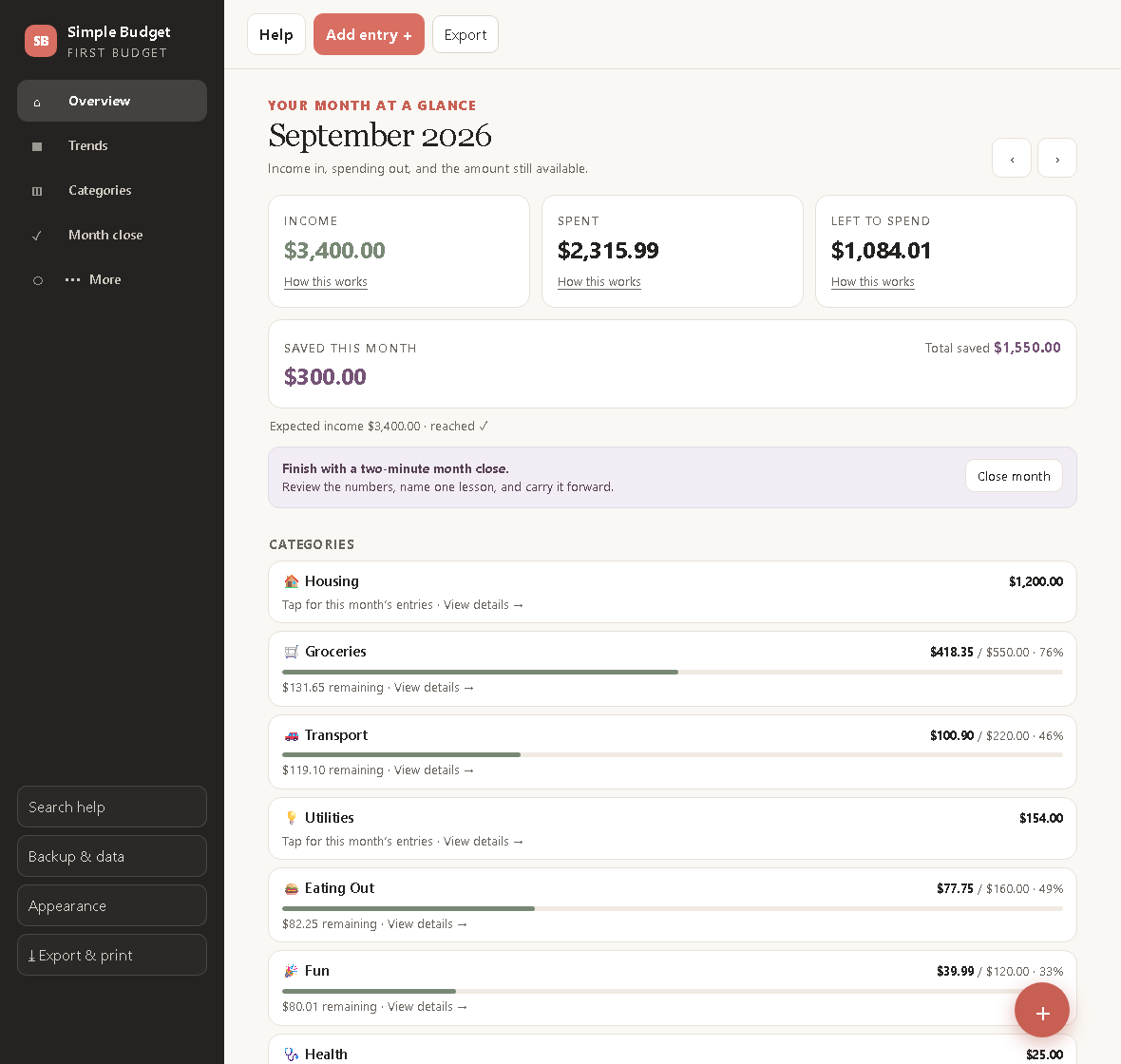
The Ten-Minute Budget: A Free, Simple Way to Start
A budget you can set up in ten minutes and keep in two minutes a month. Income, expenses, one savings line, and a close that takes less time than a coffee.
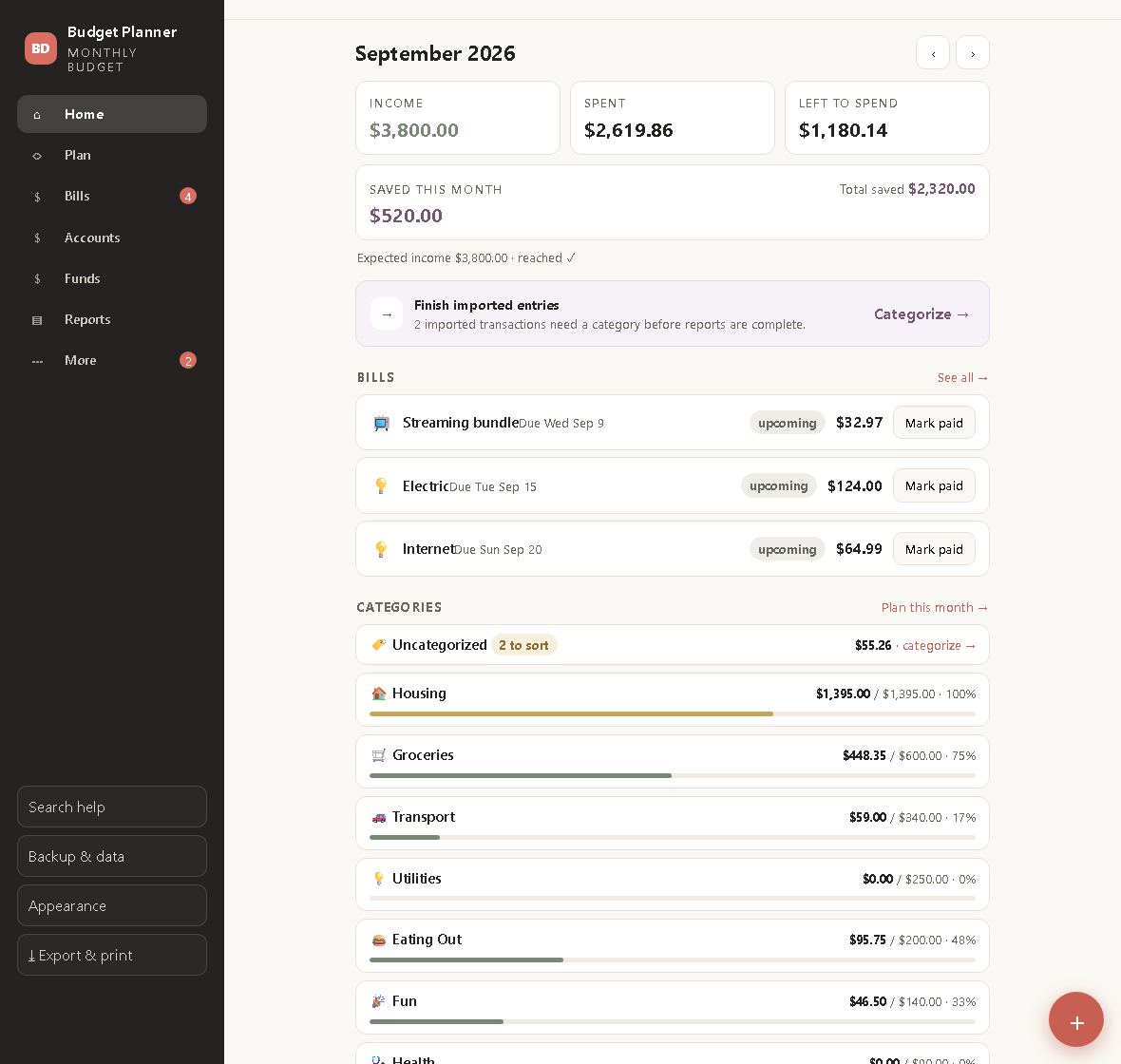
Reconcile Your Budget Every Month: The Habit That Makes Budgets Stick
Why a budget drifts from your bank balance, how to reconcile it in fifteen minutes, and how sinking funds keep annual bills from wrecking a month.
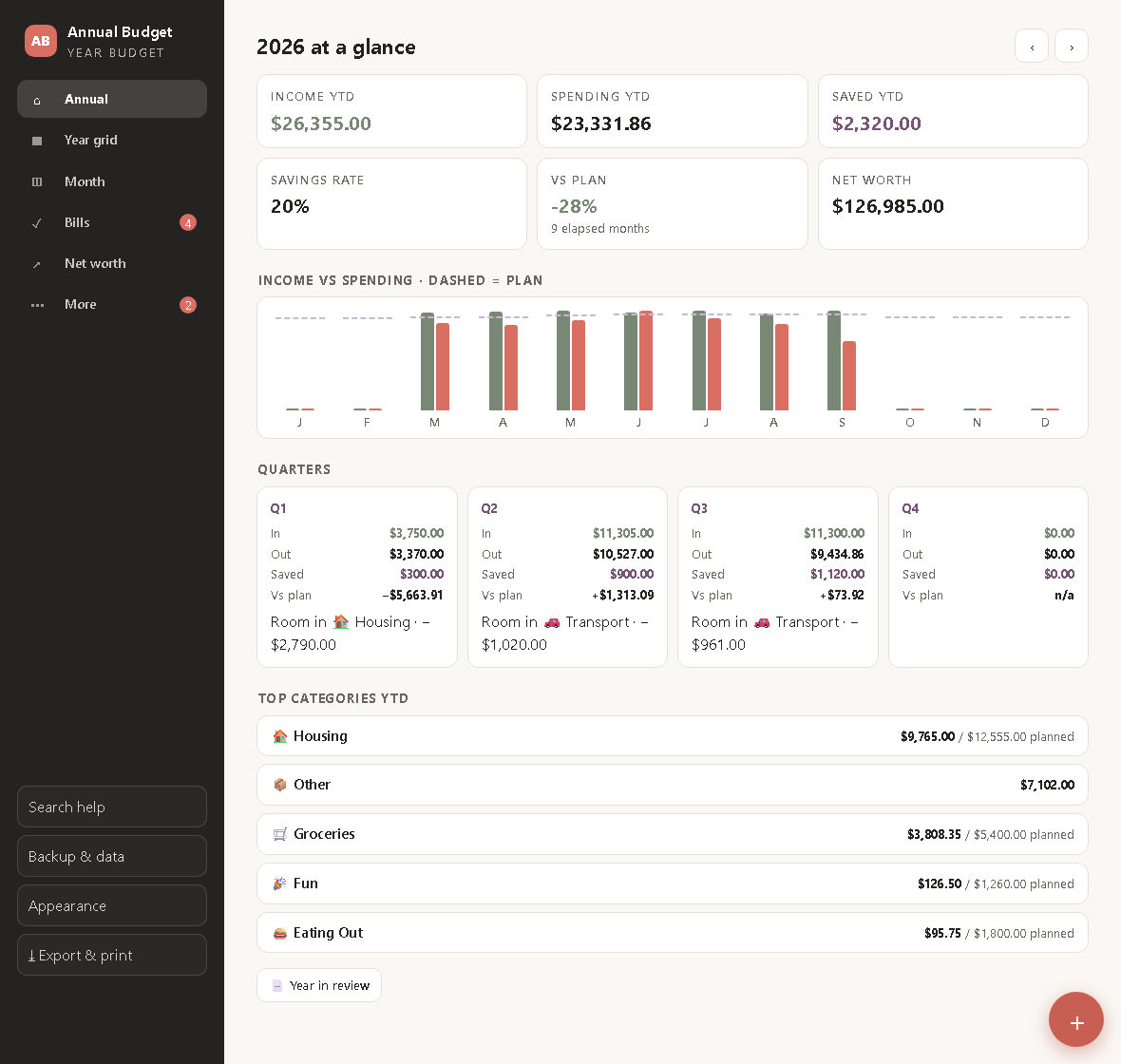
How to Build an Annual Budget (and Actually Use It All Year)
A twelve-month budget in three layers, plan, actual and difference, with the elapsed-month maths that stops the year grid from lying to you in March.