Monthly & annual budgeting
The Ten-Minute Budget: A Free, Simple Way to Start
There is a kind of budget that people put off for years because they imagine it as a project. Spreadsheets, categories, a Sunday afternoon, a sense of dread. And there is the kind that takes ten minutes and works, which is the kind almost nobody starts with because it does not look serious enough.
Here is the ten-minute version. It has four parts, it costs nothing, and it is more than most people ever do.
Part one: income, once
Write down what comes in each month and when. If it is the same every month, set it up once and let it repeat. If it varies, use the lowest figure you would bet on, because a budget built on a good month collapses in an ordinary one. Two minutes.
Part two: expenses, as they happen
Every time money leaves, note it with one word: groceries, fuel, rent, phone, fun. Not a receipt, not a description. One word and an amount, entered in the moment. The habit takes a few days to stick and then it is automatic, and it is the only ongoing work the budget asks for.
Resist the urge to build a category tree. Eight or nine words cover almost everything. If you cannot decide what a purchase is, "other" is a real answer.
Part three: pay yourself
Add one line for savings, and treat it as an expense you pay on the first of the month, not as whatever is left on the thirtieth. It can be small. The point is that saving is a thing you do, not a thing that happens to you if the month goes well. Watching a monthly and an all-time savings total climb is the most motivating number in the whole budget.
Part four: the two-minute close
At the end of the month, look at three figures: what came in, what went out, and what was saved. Compare with last month. Write one sentence: "Eating out crept up," or "First month with money left." Then close the month and start the next one. Two minutes.
That sentence, month after month, is where the insight lives. Not in charts. In the twelve honest sentences you wrote to yourself.
After three months
Once you have three closed months, two things become possible that were not possible on day one. You can see a trend: income versus spending over time, and whether the gap is widening. And you can add a plan to one or two categories, a rough cap on the word that keeps surprising you, because now you know which word that is.
You do not have to. Plenty of people run this budget for years with income, expenses, savings and a close, and never add another feature. That is not a failure to progress. That is a budget that fits.
Where the app comes in
Simple Budget is this method and it is free, with no account, no ads and no catch. A four-step setup gets you to a first real budgeting win in minutes; entries go in on a fast labelled sheet; savings is treated as paying yourself with monthly and all-time totals; monthly income rules repeat without duplicating and handle the 31st and leap years; six-month trends appear once you have the history; and the month close takes two minutes with guidance, a snapshot and a note. It runs offline in your browser and exports CSV and a complete JSON backup. When you outgrow it, the paid apps in the shop pick up where it leaves off.
Frequently asked questions
Is a free budget app really enough?
For most people starting out, yes. The things that make budgets work are logging spending and closing the month, and neither requires a paid tool. Pay for an app when you need something specific: paycheck-by-paycheck planning, shared accounts, sinking funds, bank import.
What if I miss a few days of logging?
Add what you remember, estimate the rest under "other", and carry on. A budget with a rough week in it is far more useful than one abandoned because it stopped being perfect.
Do I need to track cash spending?
Yes, but roughly. Note the withdrawal as "cash" and, if you can, what most of it went on. Precision matters less than the habit of writing it down.
Keep reading
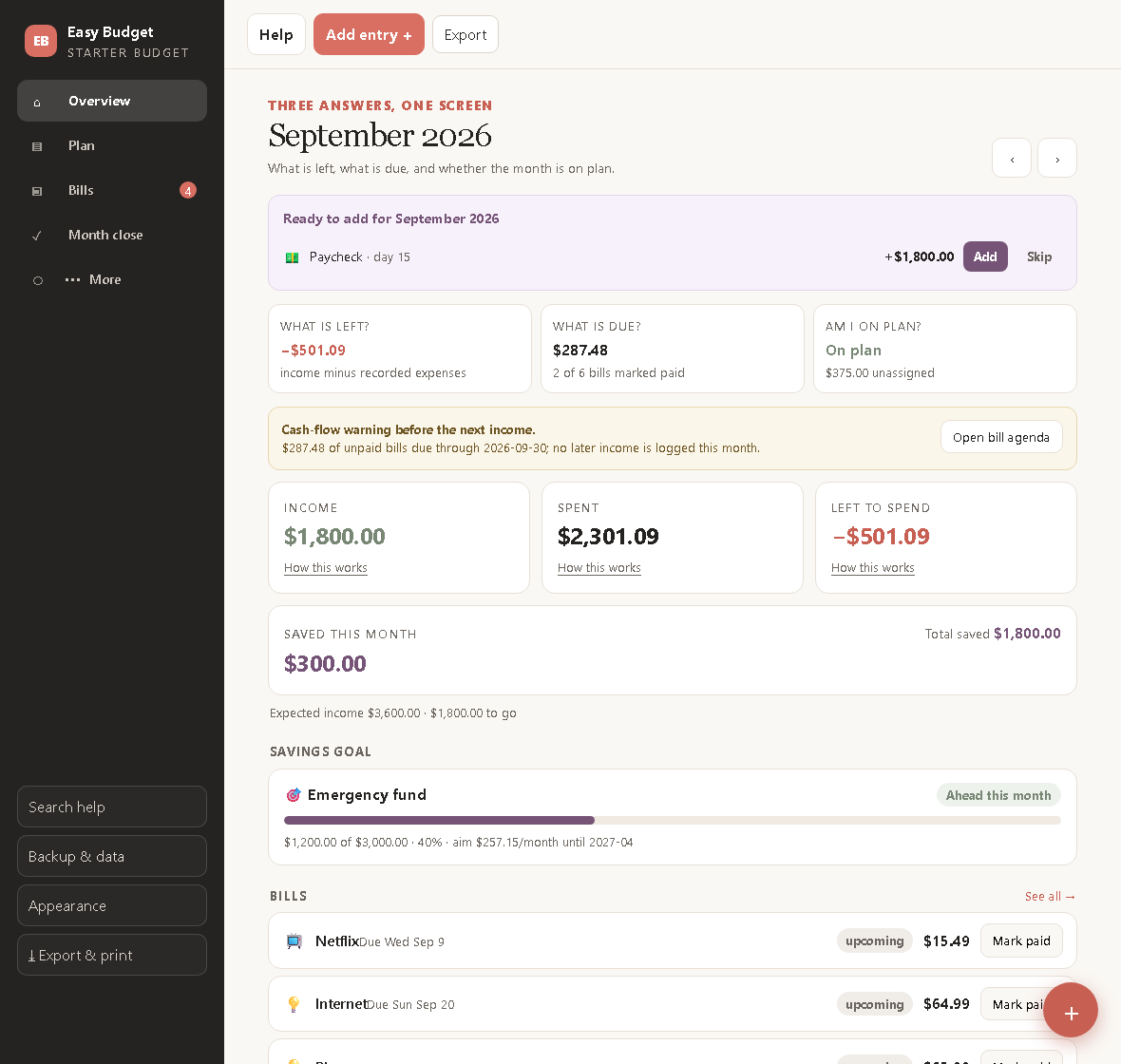
How to Make Your First Budget in Twenty Minutes
A beginner's budget with only three parts, bills, a plan and one goal, and the three questions it should answer every time you open it.
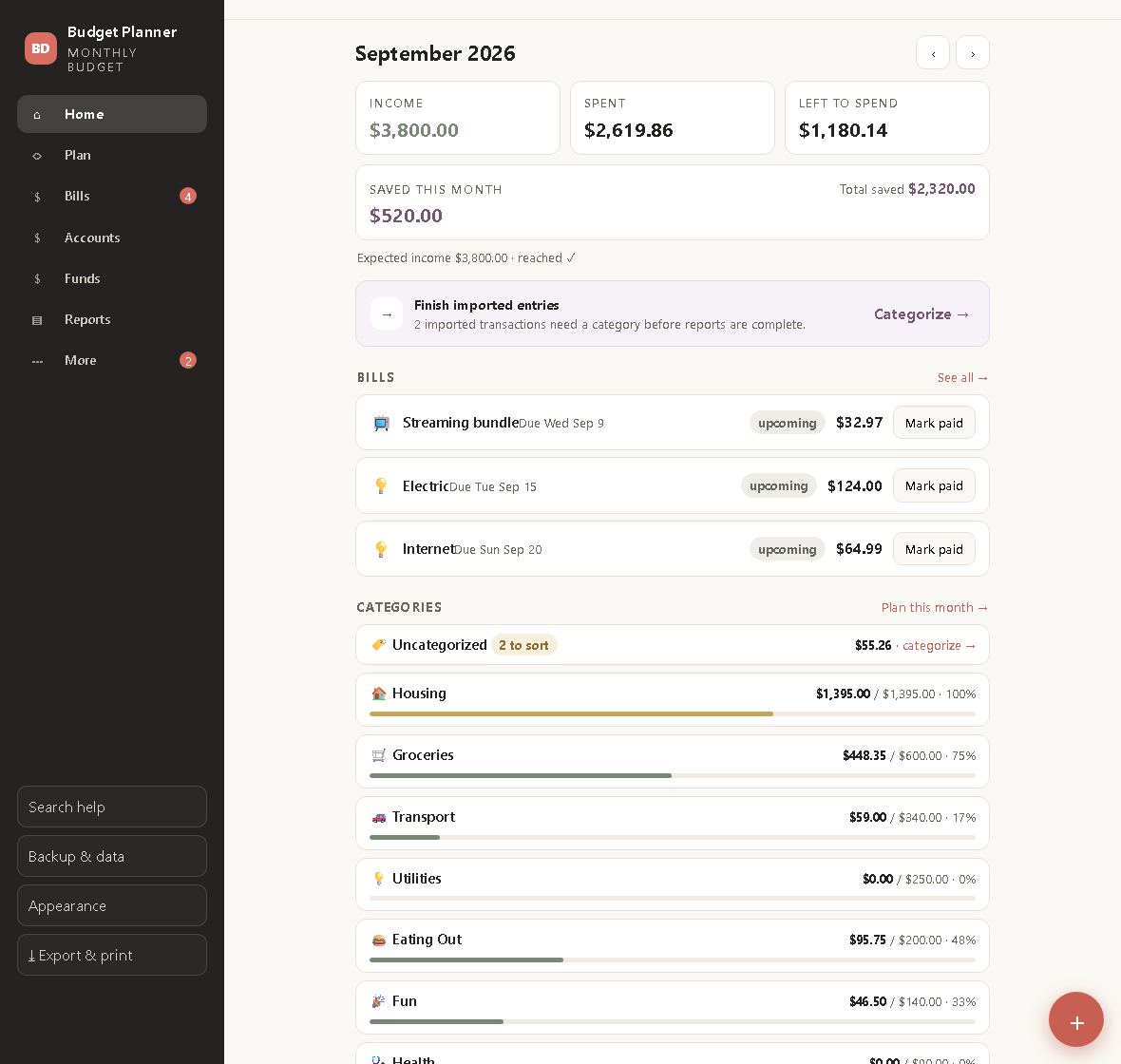
Reconcile Your Budget Every Month: The Habit That Makes Budgets Stick
Why a budget drifts from your bank balance, how to reconcile it in fifteen minutes, and how sinking funds keep annual bills from wrecking a month.
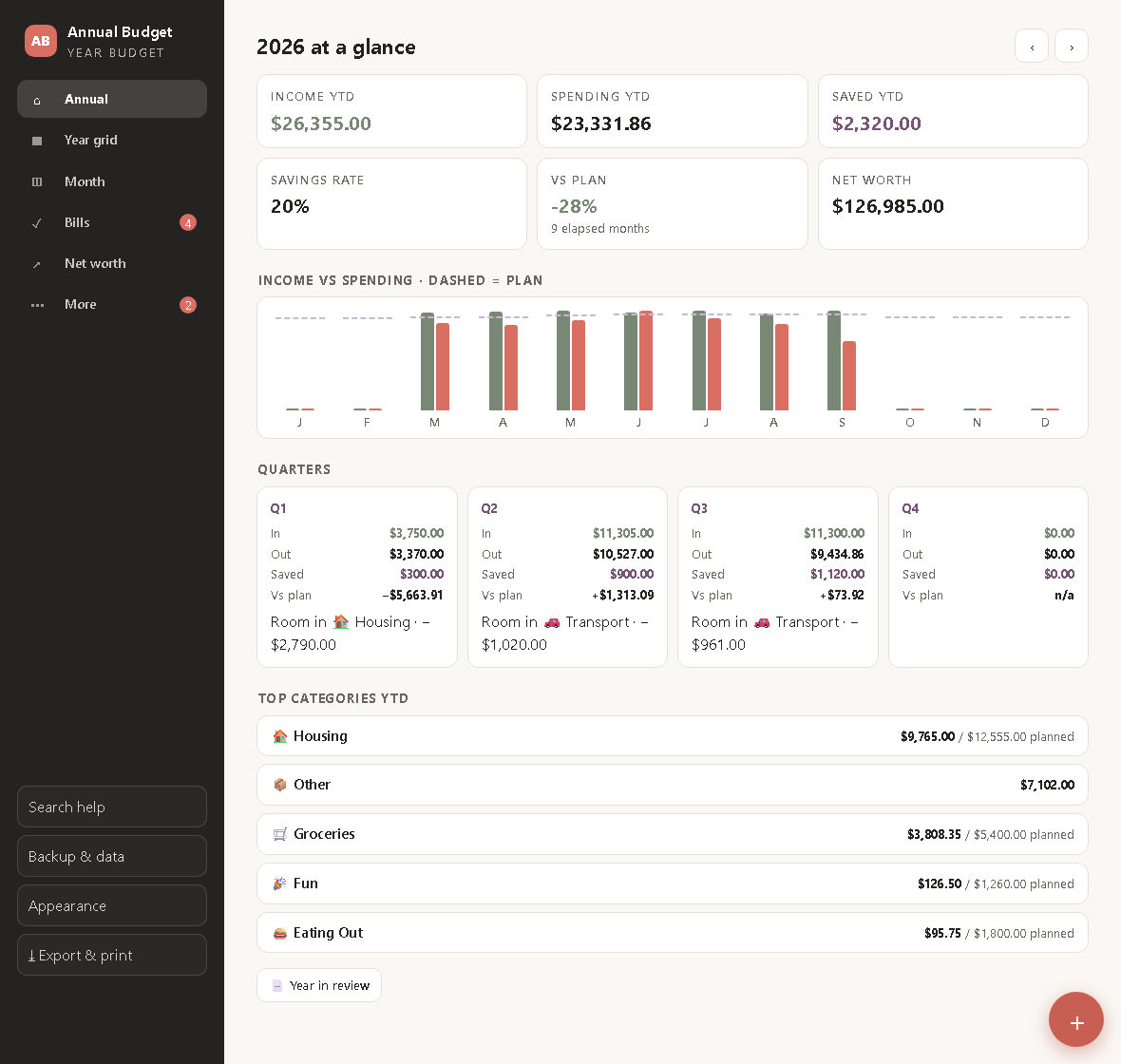
How to Build an Annual Budget (and Actually Use It All Year)
A twelve-month budget in three layers, plan, actual and difference, with the elapsed-month maths that stops the year grid from lying to you in March.