Reading
How to Track Your Reading (and Actually Remember What You Read)
Most reading trackers are a number. Forty-two books this year, a bar chart, a badge. That is fine as far as it goes, but it does not answer the questions readers actually have in December: what was the one I loved in March, which book in that series comes next, where was that line I meant to write down, and why do I feel like I read less this year when the number says more.
A reading log worth keeping records the reading, not just the finishing.
Log the session, not the book
A book is finished once. It is read over a dozen sittings, and the sittings are where the information is. Twenty pages on Tuesday, none for a week, ninety on a rainy Sunday. Logging sessions, pages for a print book, minutes for an audiobook, gives you a pace, and a pace gives you a forecast: at this rate, this book finishes on the 19th. It also gives you the honest picture of a reading slump, which is usually a fortnight of zero sessions rather than a fall in the annual total.
Sessions should be editable. Getting the page number wrong on Tuesday and fixing it on Thursday should recompute everything downstream without drama.
Catalog the edition you actually hold
The paperback you own is not the hardback in the database. Page counts differ, covers differ, and if you are logging pages, the edition matters. Record the real one, with its ISBN if you like, on custom shelves that mean something to you: "borrowed," "signed," "lent to Sam." A cover image is nice; keeping it on your own device, not a server, is nicer.
Series in the right order
Series are where reading logs go to die. Book 2.5 is a novella, book 4 was published before book 3 chronologically, and the "next up" you bought turns out to be the wrong one. Give every series entry a decimal order, so 2.5 sits where it belongs, and let the log tell you what comes next. That single feature saves more wrong purchases than any recommendation engine.
Rereads are their own history
A book read in 2019 and again in 2026 is two readings, with two ratings and two sets of notes, and the second should not overwrite the first. Keep reread history independent. The gap between what you thought at twenty-five and what you think at thirty-two is often the most interesting thing in the log.
Reviews, notes, quotes
Half a star matters; "3.5" is a real opinion. A private note is where you record why. Quotes, with the page, are the part you will search for years later, and they should live with the book rather than in a notes app that does not know which book they came from.
Challenges and a fair TBR picker
An annual goal, thirty books, is the classic challenge, and a good one. Prompt challenges, "a book in translation," "a book published the year you were born," are the ones that change what you read. Both should be trackable against the log without extra work.
Then there is the to-be-read pile, which for most readers is a source of guilt. A picker that chooses from the pile, honouring filters like "under 300 pages" or "on my shelf," and does so fairly rather than always suggesting the same three, turns the pile back into a pleasure.
The year recap
In December, one page: the count, yes, but also the genre mix weighted by pages rather than titles, the longest book, the fastest read, the streaks, the best-rated, and the quotes you saved. Printed, it is the reading year you actually had, and it is worth more than a badge.
Where the app comes in
The Book Tracker is this log: cover grid, compact list, visual shelf and data-table views; full edition metadata with custom shelves and optional device-only cover images; editable page or audiobook-minute sessions with safe historical recomputation; seven-day pace and finish forecasts once there is enough data; half-star reviews, private notes, quotes and independent reread history; decimal-aware series order with automatic next-up guidance; annual goals, prompt challenges and a fair filtered TBR picker; weighted genre mix, drill-down statistics and forgiving reading streaks; and a single-page printable year recap. It imports an existing CSV with reviewed mapping and duplicate protection, and runs offline with complete JSON backups.
Frequently asked questions
I already have years of data in a spreadsheet or another app. Can I bring it in?
Yes, as CSV. The import should show you how it mapped your columns before it commits anything, and skip rows it has already seen so a second import does not double your library.
Should I track audiobooks in pages or minutes?
Minutes. Converting to pages is guesswork; logging the minutes you listened gives an honest pace and a real finish forecast.
What is a forgiving reading streak?
One that counts a day with any reading, however short, and does not reset to zero because you were ill on a Wednesday. The purpose of the streak is to notice the slump, not to punish it.
Keep reading
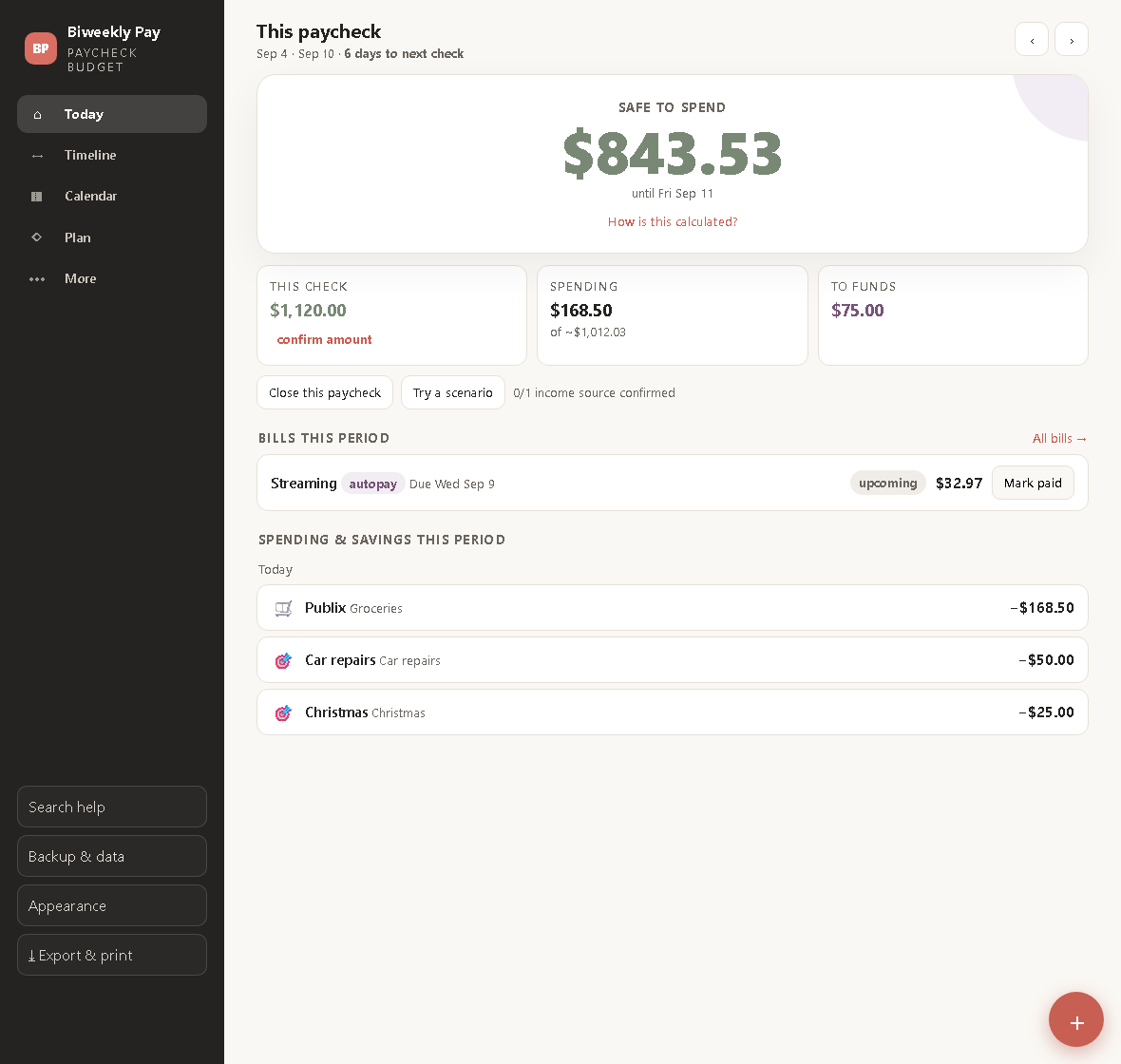
How to Budget When You're Paid Every Two Weeks
A biweekly paycheck budget assigns every bill to the check that funds it. Here is the method, the three-check month, and the one number to watch.
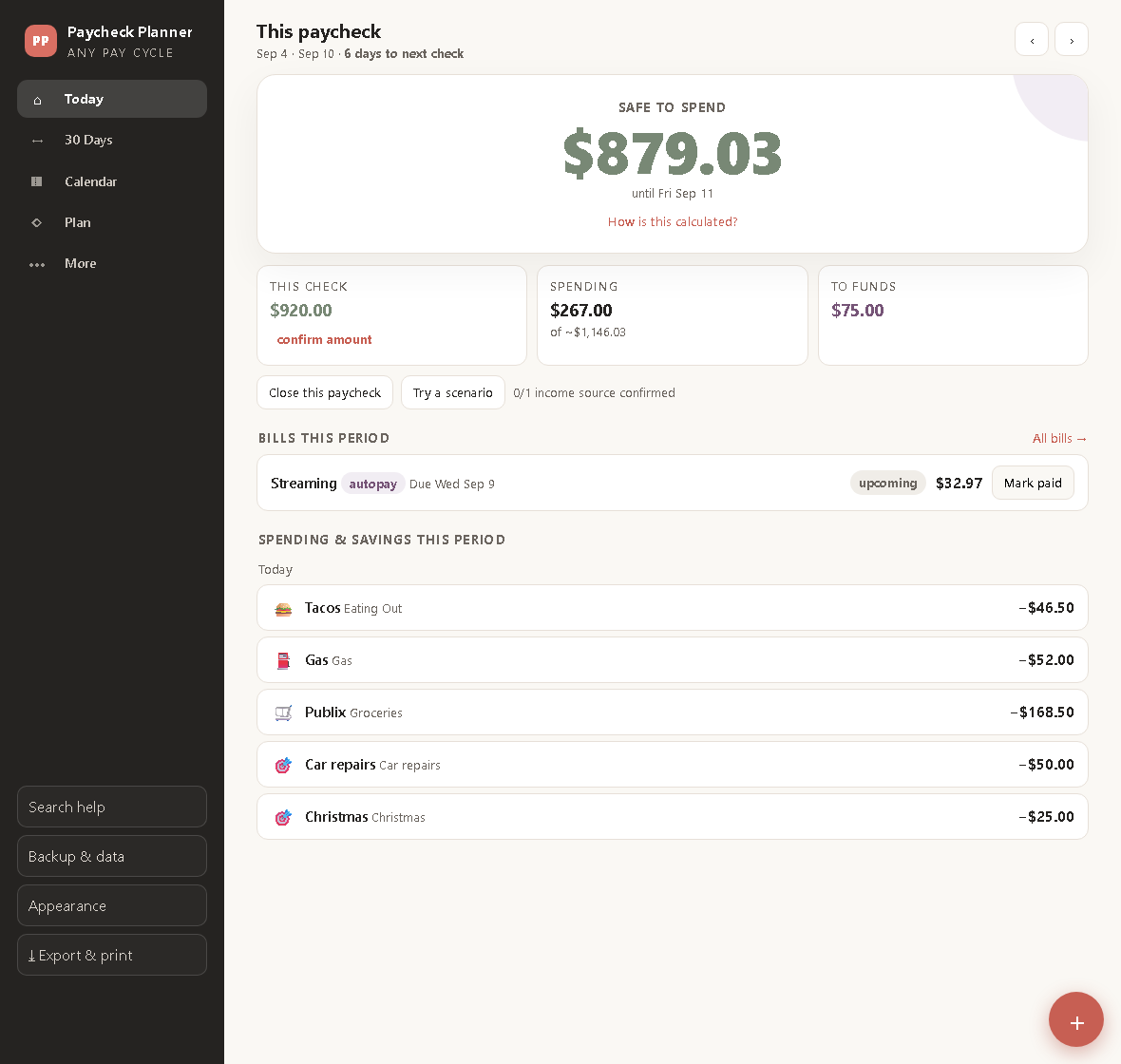
Budgeting a Household With Two, Three or Four Pay Schedules
One person weekly, one biweekly, a side job monthly. How to budget mixed income without guessing which payday covers which bill.
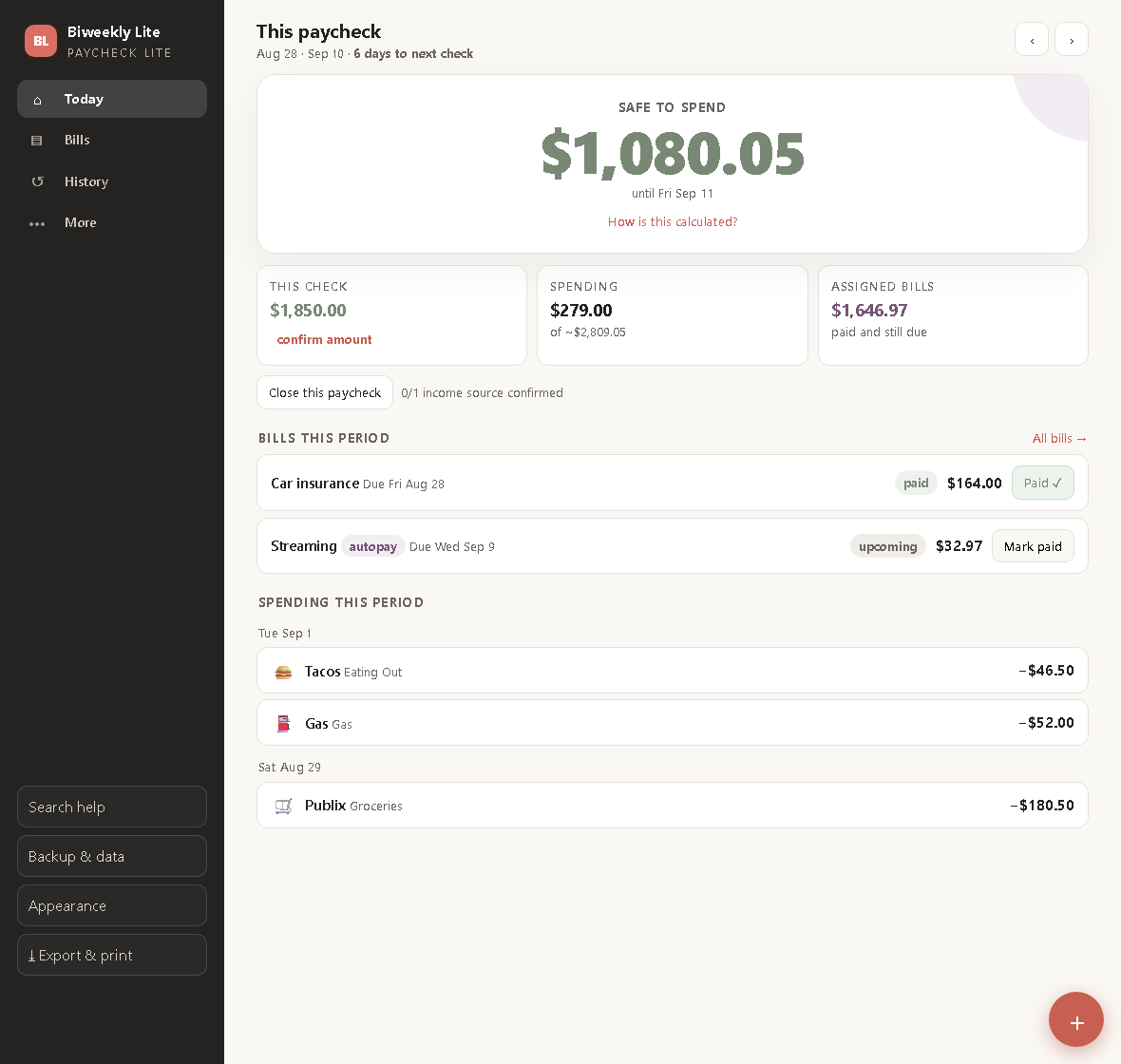
The One-Paycheck Budget: Protect Every Bill With a Single Number
A stripped-back method for one income paid every two weeks. Match bills to checks, confirm the deposit, and live by one honest Safe to Spend figure.