Small business
Simple Bookkeeping for a Small Business: Profit, Stock and Tax Without the Panic
Most small businesses do not fail at selling. They fail at knowing. The shop is busy, the account looks healthy, and then tax season reveals that half the "profit" was sales tax collected on behalf of the state, the stock in the spare room cost more than anyone remembered, and the accountant needs three days to reconstruct a year from bank statements and a shoebox.
Bookkeeping for a one-person business does not need to be accounting. It needs five numbers, kept honestly, every month.
The five numbers
- Revenue. What customers paid, before fees, before tax, before anything.
- Cost of goods sold. What the things you sold actually cost you to make or buy. Not what you bought this month; what the sold items cost.
- Expenses. Fees, shipping, packaging, software, the booth rental, the mileage.
- Sales tax collected. Money that was never yours. It sits in your account and belongs to the state.
- Owner draws. Money you took out. Not an expense; a distribution of profit.
Revenue minus cost of goods minus expenses is profit. Sales tax and owner draws must be kept out of that calculation, and the most common bookkeeping error in small shops is letting one or both leak in. Tax collected counted as revenue makes the business look better than it is. Draws counted as expenses make it look worse.
Cost of goods: the number that surprises everyone
If you buy beads at $2 in January and $3 in June and sell a necklace in July, what did the beads in it cost? Average cost is the answer most small businesses should use: the running average of what you paid for the stock you hold. It is simple, it is defensible, and it means the profit on each sale is a real number rather than a hope.
The important discipline is that cost is frozen at the moment of sale. If you later discover you mis-entered a purchase price, the correction should recost future sales, not silently rewrite the profit you already reported on past ones. Any recost of a locked purchase deserves a preview and a permanent audit entry.
See the profit before you sell
The most useful thing a bookkeeping tool can do for a maker is show the profit on a sale before the sale happens. Price, minus average cost, minus shipping, minus the channel fee, minus the tax you must collect and hand over: that is what you keep. Seeing that a $30 item nets $9 after fees and postage changes pricing decisions in a way a monthly report never does.
Refunds put stock back at the cost it left
A refund is not simply reversed revenue. The item comes back, and it comes back into inventory at the frozen cost it left with, not at today's average. A guided refund that restores stock correctly keeps both the inventory value and the profit history honest.
Invoices, mileage, tax set-aside
Three small things that turn into large ones by December:
- Invoices. A clean printable invoice with an overdue ageing view is how you find out who has not paid without scrolling through email. Voided invoices stay in the history; they do not vanish.
- Mileage. Every trip to the post office or the craft fair is deductible at the rate in force on that day. Log the trip with the date, and the rate is saved with it, so a rate change next year does not rewrite this year.
- Tax set-aside. Move a percentage of every sale into a separate pot as you go. A six-month cash projection that shows the set-aside as spoken for is what stops the tax bill from arriving as a surprise.
The accountant pack
At year end, or at the quarter, your accountant wants: a profit and loss statement, category totals, mileage, inventory value, sales tax collected and remitted, and a note of where the books start and stop. If your bookkeeping is honest, that pack is one click, and the accountant's bill goes down because they are reviewing rather than reconstructing.
Where the app comes in
Small Business Bookkeeping is this back office: a profit and loss statement that treats sales tax and owner draws correctly; average-cost inventory with frozen cost-of-goods history; a quick-sale profit preview with shipping, channel fees and tax; guided refunds that restore stock at the original frozen cost; locked-purchase recost previews with a permanent audit entry; an invoice builder with clean printing, overdue ageing and void history; mileage at the saved rate from each trip; tax set-aside tracking with a six-month cash projection; a searchable ten-thousand-row ledger with accounts, jobs and channels; and a one-click accountant ZIP with P&L, categories, mileage, inventory, sales tax and a boundary note. It runs offline with complete JSON recovery and a built-in Help Center.
Frequently asked questions
Do I need double-entry accounting?
For a sole trader or a small LLC, no. You need revenue, cost of goods, expenses, tax collected and draws kept separate and reconciled to your bank. Double-entry is what your accountant does with that.
How do I value the stock I already have?
Enter what you paid for it, as best you can, and let the average-cost method take over from there. An honest estimate on day one beats a precise one you never make.
What about selling on several channels?
Tag each sale with its channel and the fee it charged. Profit by channel is the number that tells you which marketplace is actually worth the fees.
Keep reading
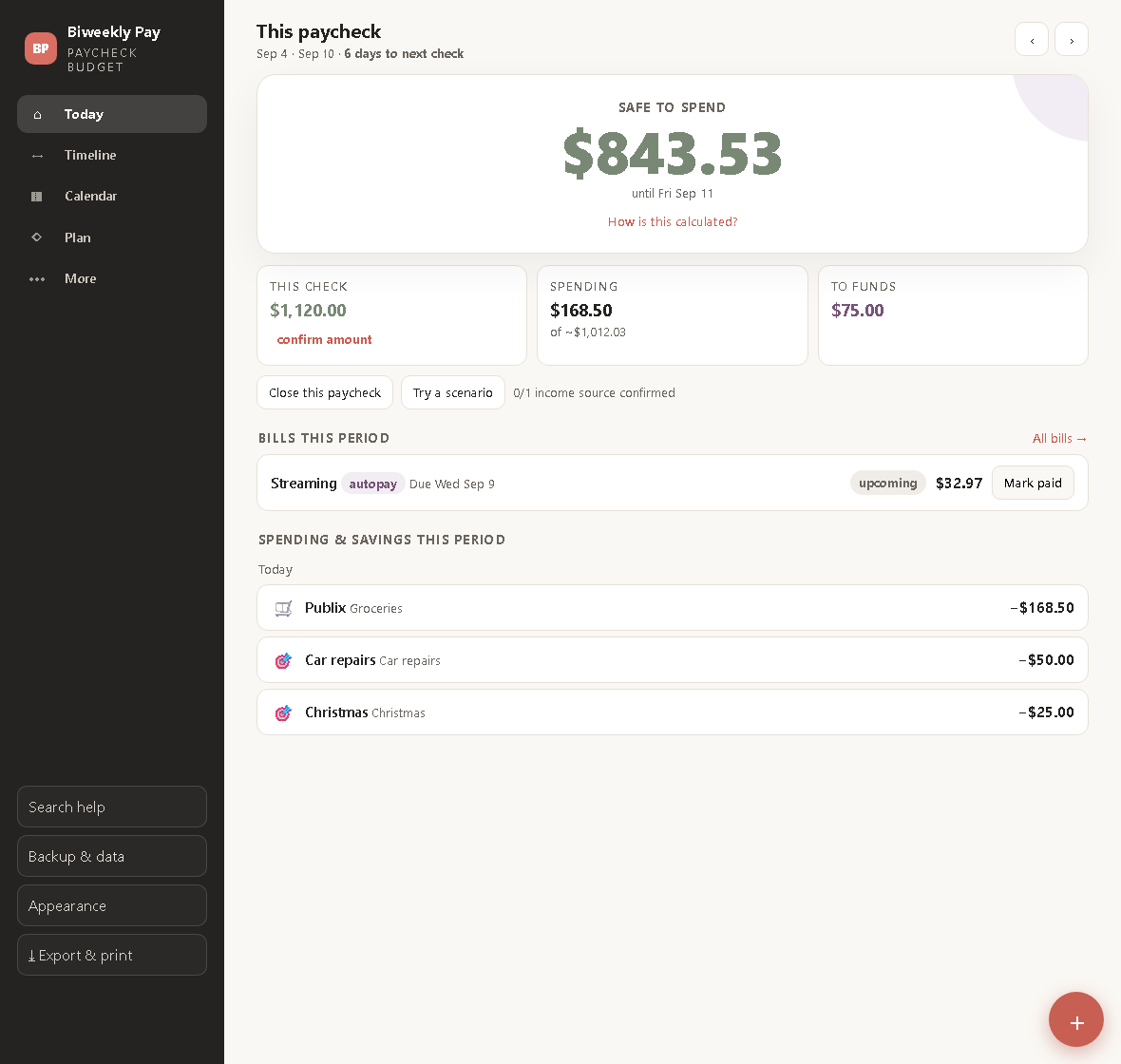
How to Budget When You're Paid Every Two Weeks
A biweekly paycheck budget assigns every bill to the check that funds it. Here is the method, the three-check month, and the one number to watch.
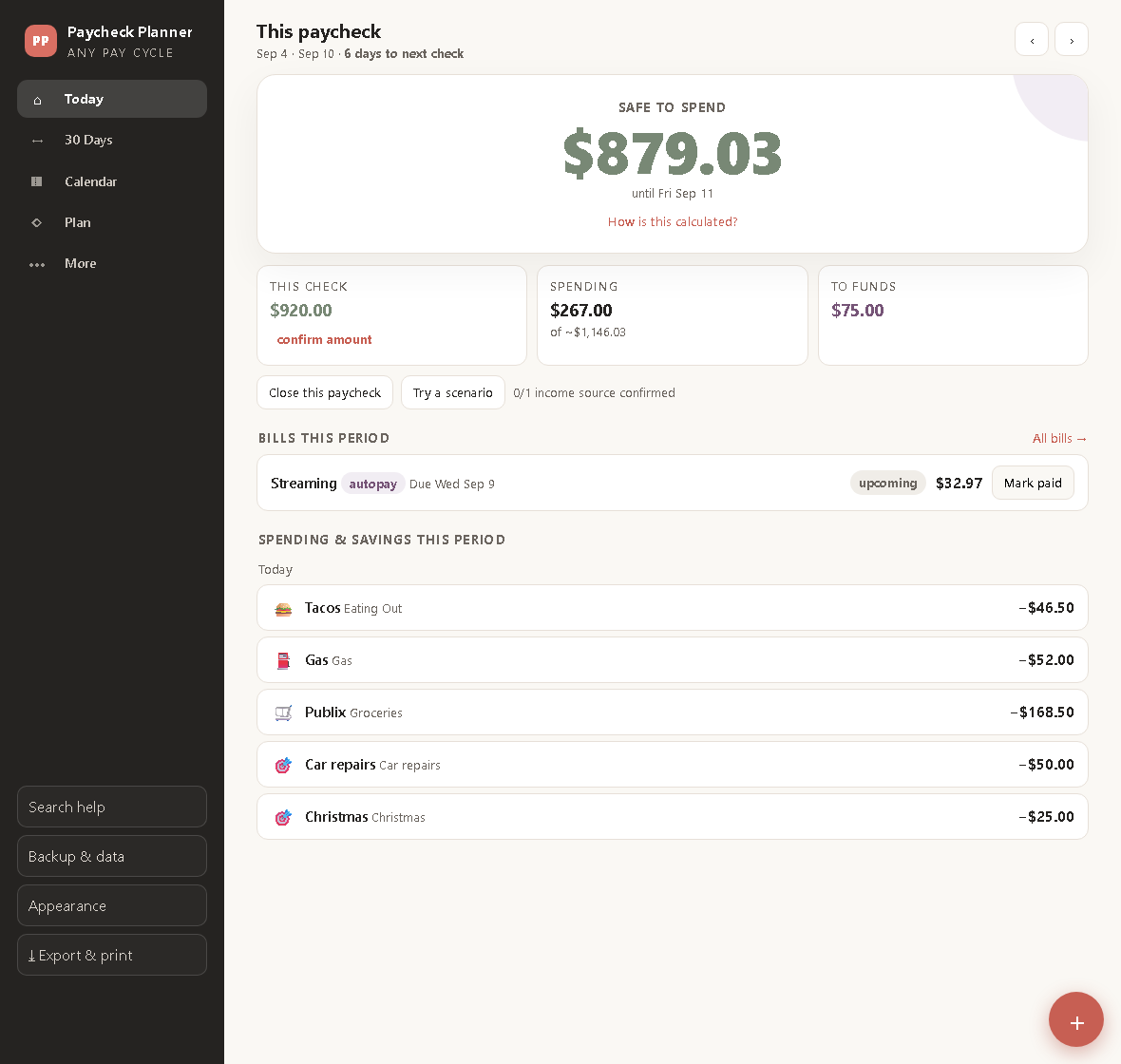
Budgeting a Household With Two, Three or Four Pay Schedules
One person weekly, one biweekly, a side job monthly. How to budget mixed income without guessing which payday covers which bill.
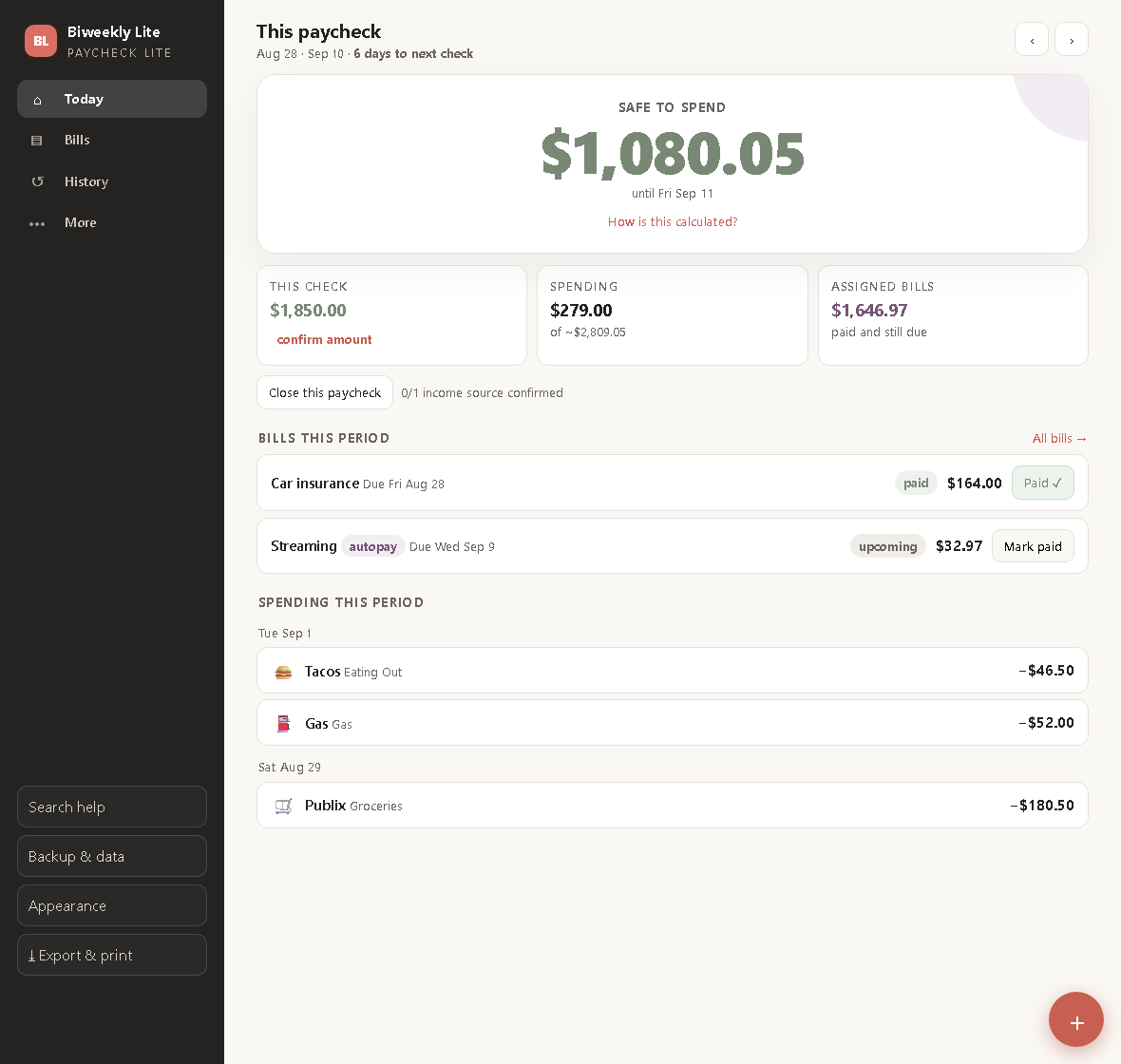
The One-Paycheck Budget: Protect Every Bill With a Single Number
A stripped-back method for one income paid every two weeks. Match bills to checks, confirm the deposit, and live by one honest Safe to Spend figure.