Productivity & ADHD
ADHD Routines That Run Themselves: One Step on Screen at a Time
A task list handles the things you decide to do. It does nothing for the things you have to do every day and somehow still forget: the morning sequence, the shutdown at night, the Sunday reset, the medication. Those are routines, and for an ADHD brain a routine written as a checklist is a list of twelve chances to get distracted between step one and step twelve.
The fix is to stop showing the list.
A routine is a playlist
Show one step. One. "Take meds." A big Done button. When it is pressed, the next step appears: "Drink water." Nothing else on the screen, nothing to scroll, no sense of how many steps remain to create dread. The routine plays like a playlist, one track at a time, and finishing it feels like something happened because something did.
Two rules make this humane:
- Skipping is a button, not a failure. Some mornings the shower is not happening. Skip it, move on, keep the routine alive. A routine that demands perfection gets abandoned at the first imperfect day.
- Interruptions resume. The phone rang halfway through. When you come back, the routine is where you left it, same day, no restart. If it was yesterday, it logs honest partial credit and today starts fresh.
A gentle timer on each step gives a sense of pace without an alarm. Some people run routines in body-double mode, with the screen as the quiet companion that keeps the sequence going while they do the thing.
Routines earn streaks the forgiving way
A routine you complete most days is a habit, and it should be tracked like one: with the same freezes, repairs and partial credit that keep a habit tracker from becoming a shame machine. A frozen Tuesday because of a hospital appointment is not a broken streak. Six out of seven is 86%, and the number should say so.
Low-energy mode
Some days the tank is empty before breakfast. The standard planner does not know this and presents the same mountain it always does. A low-energy switch should change the day: hide the heavy tasks, soften the focus cap from three to one, keep the routines short. Tomorrow it resets, automatically, so a bad day never quietly becomes a permanent setting.
Appointment chips, capped at two
Appointments are the ADHD ambush: known for weeks, forgotten until the morning. A countdown chip, "Dentist in 3 days," on the Today screen solves the forgetting. But five chips is a wall of anxiety, so cap them at two. The nearest two appointments show; the rest wait their turn. Today stays calm by design.
The life-admin binder
Where is the insurance policy number? Which pharmacy? When was the boiler last serviced? Whose birthday is on the 14th? These questions arrive at the worst times and the answers are in eleven places. A binder holds them in one: people, accounts, medical, and maintenance clocks that count the interval since the last service and surface only the single most overdue item, never the whole list.
The emergency one-pager
If you are scattered, sick, or someone else has to step in for a day, one printed page should know everything: medications and doses, the doctor, the people to call, the accounts that matter, the routine that keeps the household running. Print it, put it somewhere obvious, and the worst day has a script.
The whole-life weekly reset
Ten minutes on a Sunday: scan the coming week's appointments, check for anything overdue in the binder, tune up a routine that has been dragging, and clear the task inbox. Same forgiving spirit as the daily system. No grade.
Where the app comes in
The ADHD Life Planner has everything in the Habit & Task Tracker, the brain-dump inbox, focus cap of three and forgiving streaks, plus the whole-life layer: routine playlists that run one step on screen with a big Done button and zero shame, streaks with freezes and repairs, interrupted runs that resume same-day, a life-admin binder with people, accounts, medical and maintenance clocks, a printable emergency one-pager, appointment countdown chips capped at two, a low-energy mode that softens focus to one and resets daily, and a ten-minute whole-life weekly reset. It imports Habit & Task Tracker data losslessly, streaks and all, and runs offline with a searchable Help Center and five CSV exports.
Frequently asked questions
How many steps should a routine have?
As many as it takes, because you only ever see one. A twelve-step morning is fine as a playlist; it is a disaster as a checklist.
What is body-double mode?
Body doubling is working alongside another person to stay on task. The app version is a quiet, one-step screen that keeps the sequence going while you do the thing, so you are not alone with the whole list.
Does the low-energy mode reset on its own?
Yes, every day. A low-energy day should be a decision made once, not a setting you have to remember to switch off.
Keep reading
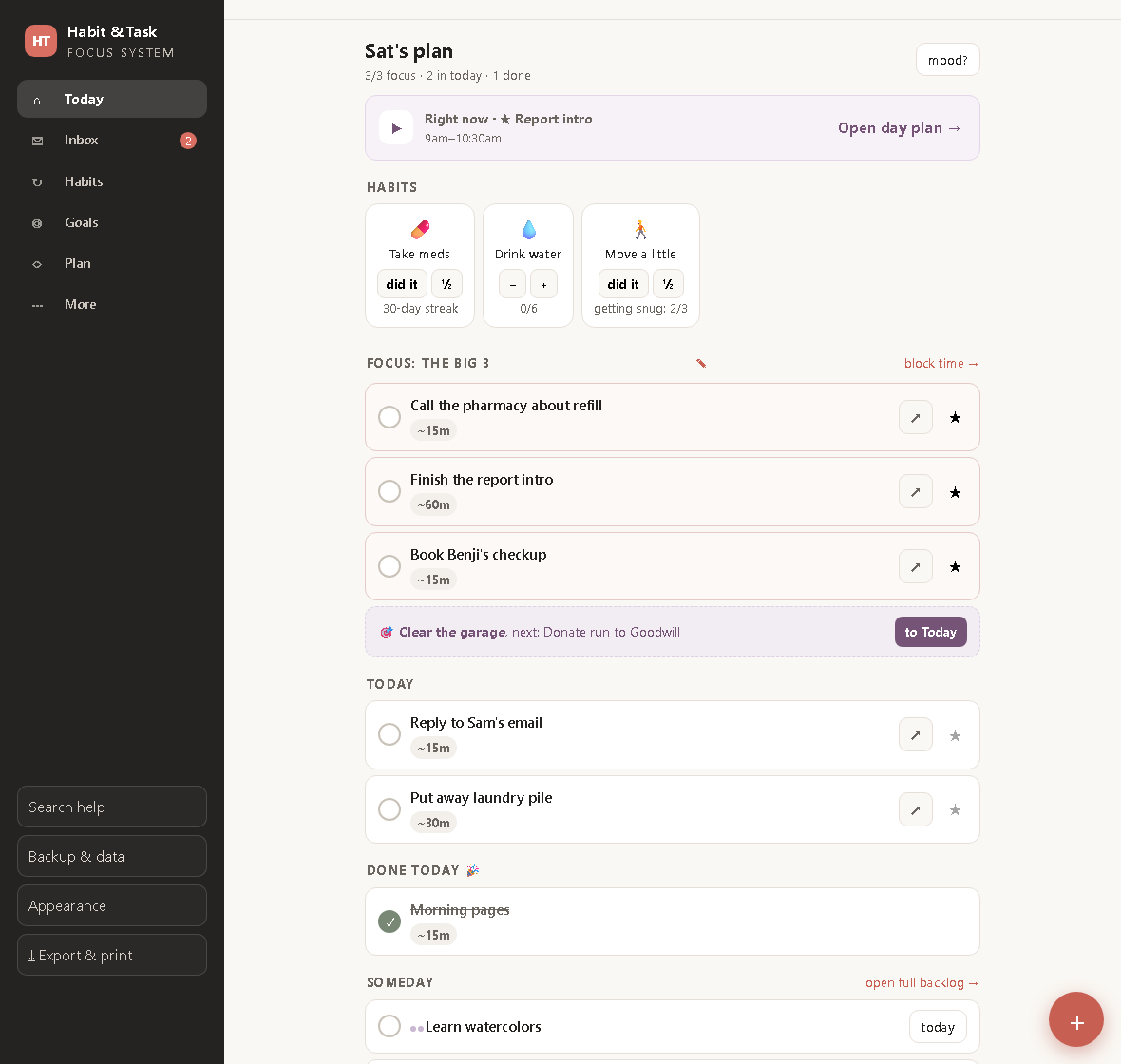
ADHD-Friendly Task Tracking: Fewer Tasks, Clearer Days
Why most to-do apps fail ADHD brains, and a calmer system built on a brain-dump inbox, a hard focus cap of three, and habits that forgive a bad week.
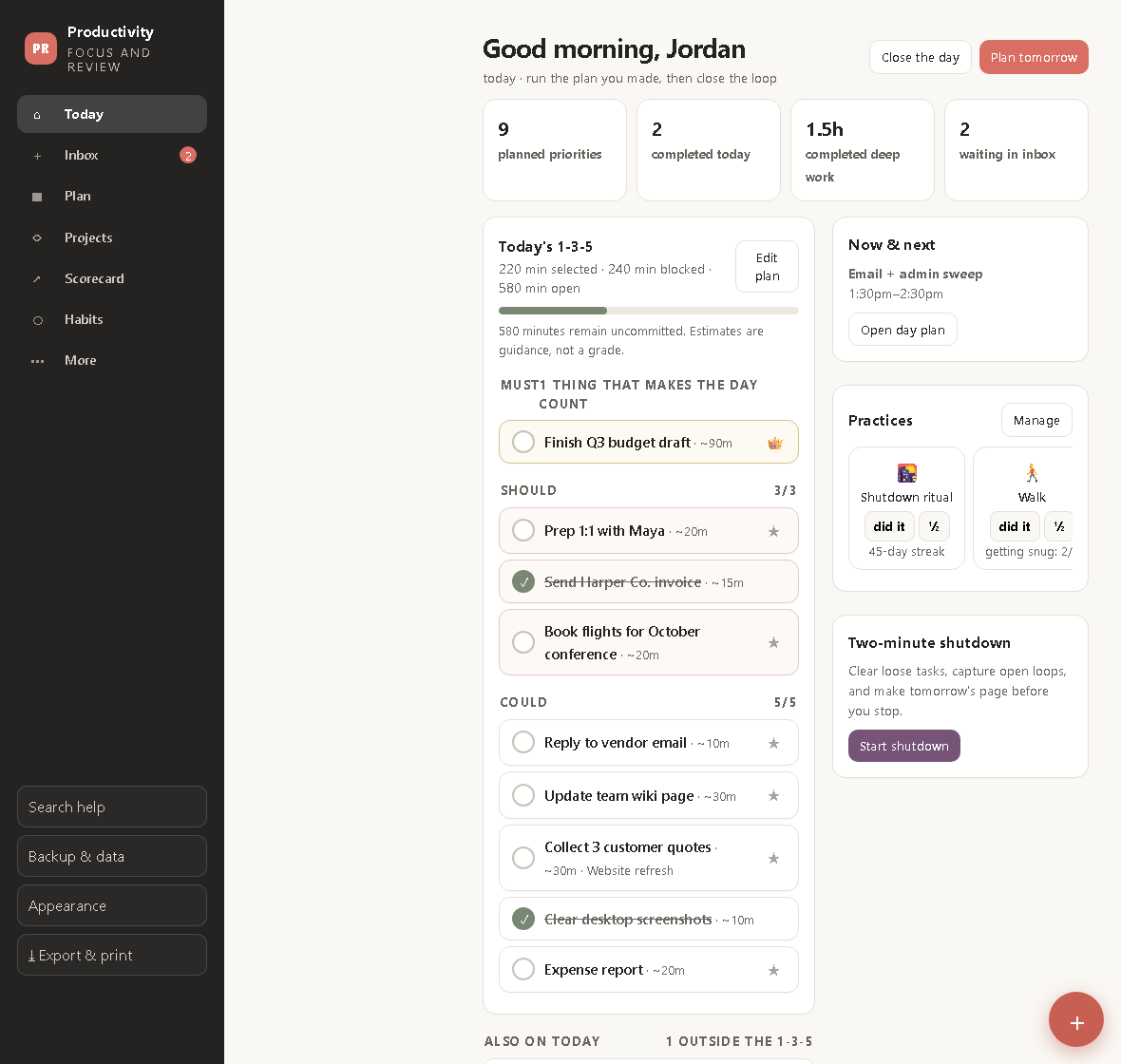
The 1-3-5 Method: Plan a Day You Can Actually Run
One must, three shoulds, five coulds, placed into real time blocks. How the 1-3-5 rule works and what a weekly scorecard should measure.
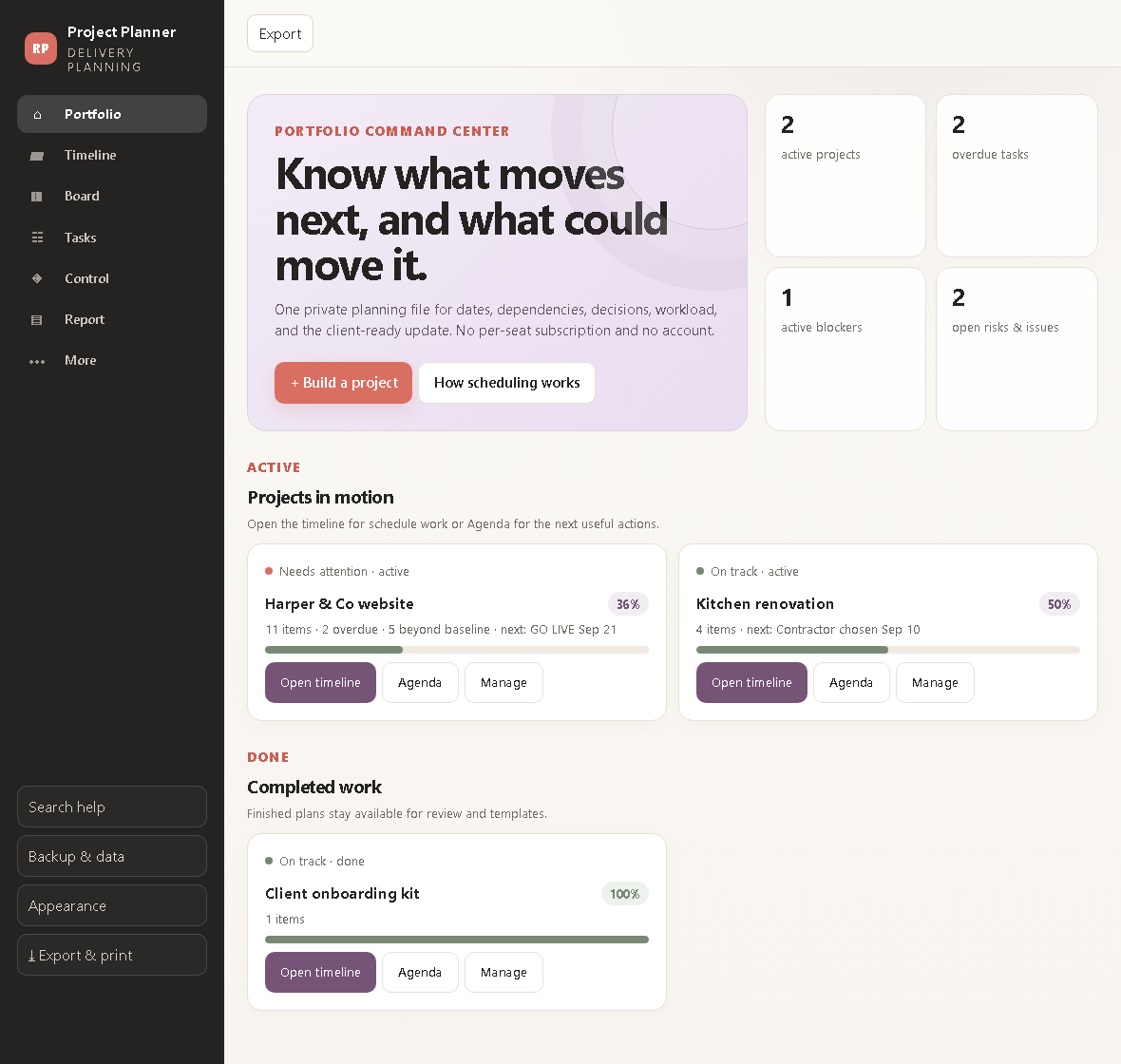
How to Plan a Project Without Losing the Plot
Dependencies, the critical path, a baseline to measure drift against, and a control room for risks and decisions, for one person who has to deliver.